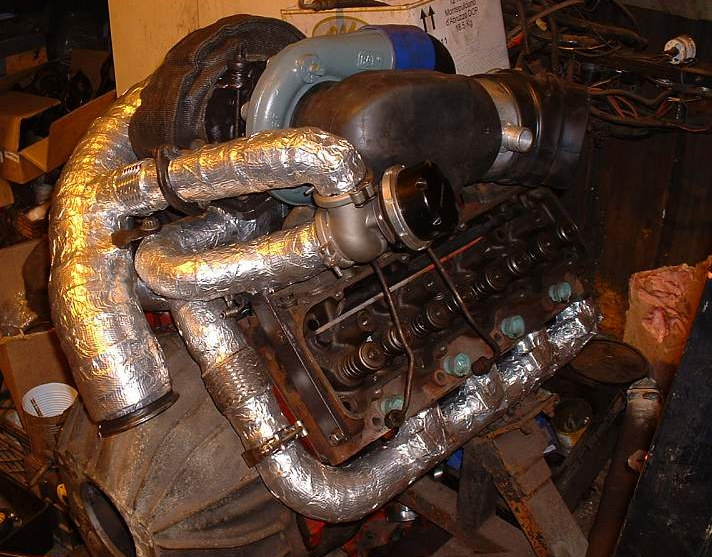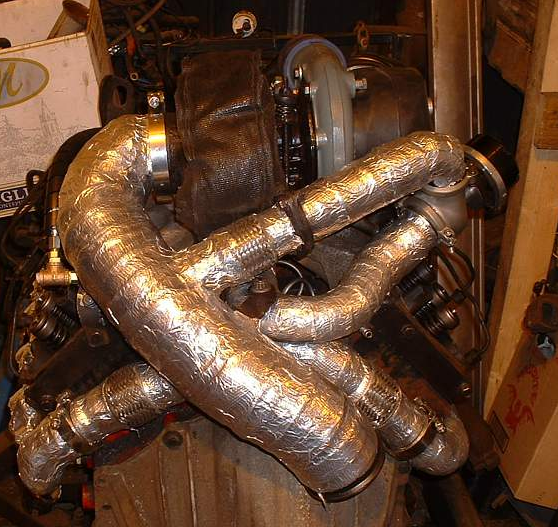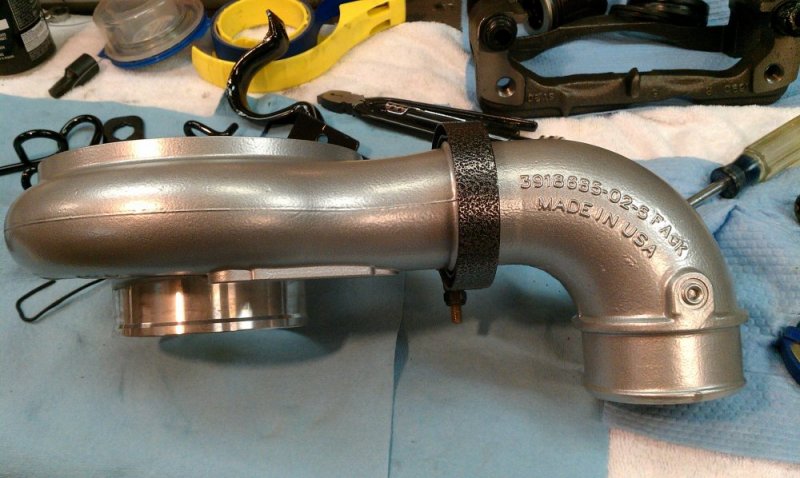
I also like the appearance of freshly blasted cast aluminum on engines - but over the years I've tired of building an engine & making it look sharp, then the Al oxidizes & also absorbs/stains from oil, etc. For cast aluminum where I'm not concerned about heat transfer properties, I powder coat the parts with a color called "silver sparkle" - turbo comp housing in pic has this color coating. It flows out/cures smooth & doesn't absorb oil or stain. After 10 years, the first parts I did are slightly oxidized compared to freshly coated parts in the same color, but little appearance degradation compared to what blasted clean bare cast Al looks like after 10 years use.
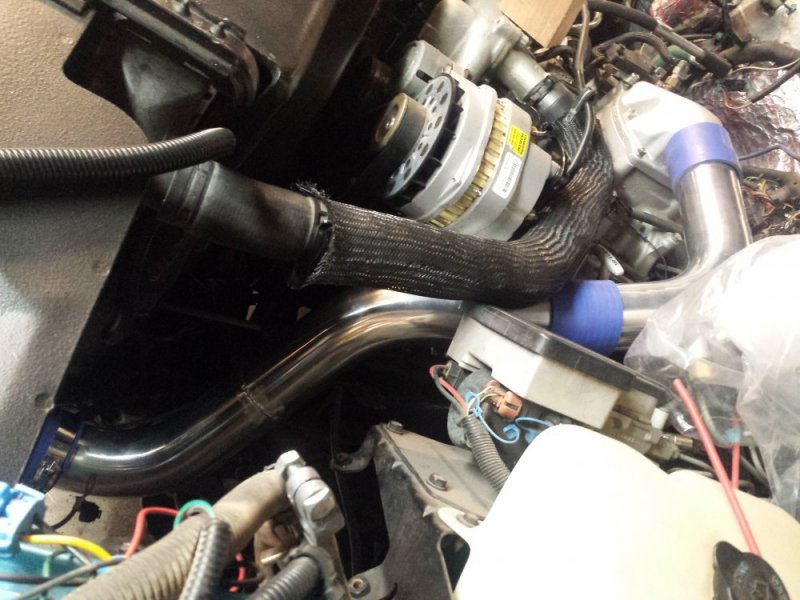
In the second pic, the alternator is relatively new cast aluminum. The Peninsular upper intake is powder coated silver, & the intake manifold was just blasted clean a decade ago & then rattle can cleared (it's got some stains as one would expect). This powder coating is the best solution I've found to keep cast Al engine parts looking close to cast Al for a good ways into the future.
On any cast engine parts, heating/baking the part helps drive out absorbed oils, etc., that are otherwise gonna try volatize out when the engine heats up thru whatever paint/coating you cover the part with. So multiple benefits to heating those parts before coating application.
Like Will's suggestion as a simple, valid way to test heat transfer properties. I sprayed my DMax intercooler with black radiator paint as it's advertised to not interfere with heat transfer (and I wanted the IC black as portions of it show thru the grill). I should try this test on the rad paint to confirm whether or not it impacts heat dissipation.
If Techline coatings still sells their Black Satin header coating to the public, that might be a good compromise for the headers. It's a decent thermal barrier, easy to apply, & very cost effective. IMHO - the marketing statement "doesn't require oven baking" while accurate, did that product a disservice. The idea was that exhaust heat would cure it. The problem was it wasn't any more scratch resistant than common spray paint until cured. So often parts got scratched etc., during install. Oven bake it before install & it toughened up considerably & held up well.