• Welcome to The Truck Stop! We see you haven't REGISTERED yet.

    Your truck knowledge is missing!
    • Registration is FREE , all we need is your birthday and email. (We don't share ANY data with ANYONE)
    • We have tons of knowledge here for your diesel truck!
    • Post your own topics and reply to existing threads to help others out!
    • NO ADS! The site is fully functional and ad free!
    CLICK HERE TO REGISTER!

    Problems registering? Click here to contact us!

    Already registered, but need a PASSWORD RESET? CLICK HERE TO RESET YOUR PASSWORD!

What did you do with your GMT400 today...or yesterday....

That guy makes his $$ rebuilding engines or selling new ones. When someone wants his shop to swap engines only - he gets labor but not the $$$ selling one.
Not buying a used engine is same as not buying a used vehicle: if you buy a used car you bought a used engine, used transmission, used drive axles, used steering & suspension system.
People who don’t know anything about cars often get ripped off buying used.

The thing they demonstrated that was so worn out in that used engine- truth is if a guy with an automatic transmission put that engine in- the worn thrust bearing would stop wearing out so fast and might last a while, but I doubt it because to wear the thrust bearings that bad usually takes over 250,000 miles closer to 300k is my real guess.
What else is gone by then? Equal compression. Hence the advice to do a compression test before purchasing
 
I was give a case W9 loader. Engine was seized. Pulled injectors, knocker loose into each cylinder. It tirned over a 1/4 turn after about a week.
Its a four cylinder.
Valve stems is rusted into the guides.
I got back to work and never had a chance to finish getting the hood removed(cab and fuel tank filler is holding it from sliding back far enough) so to get the rocker covers removed.
I have a few days off work now so hope I can get back out there and see if them valve stems can be gently made to move.
That was the problem @dbrannon79 s engine
 
Put the new brake drums on today and braking is back to normal. Will take the Suburban over to our local mechanic to have him install the ABS Modulator Pump and work through the transfer case shifting.
Eagle Watch texted me that I blew the fuse to the Transfer Case Control Module, so that is back to the before scenario with 2Hi, 4Hi and AWD all working, but still no 4Lo. I have two brand new AC Delco encoder motors, but they are set to neutral. Transfer case will not go into neutral. You have to move the shift shaft slightly to get the encoder motor installed, but once installed it just grinds on the parking pawl in the transmission and no go whatsoever. The old encoder motor does not do this, but it does not get me 4Lo. Would like 4Lo, but it’s not a deal killer.

So he’s down to installing the reman ABS pump module and getting that working, which will be nice. I did find the ABS pump module I harvested from salvage on the shelf in the Fullerton garage. Turns out it’s not the correct ABS module for the K2500 as they are specific. However it was the pump that was bad on my existing ABS pump module and I’m betting that pump is agnostic to truck model. In theory, I could swap that pump onto my old ABS Pump module and have a second back-up unit. We shall see.
 
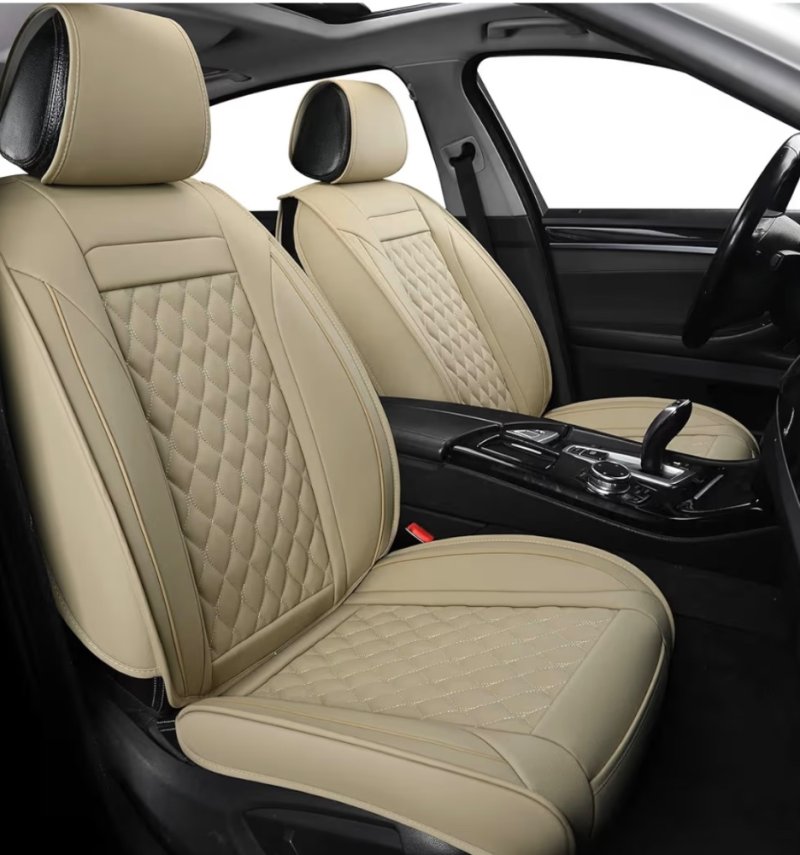
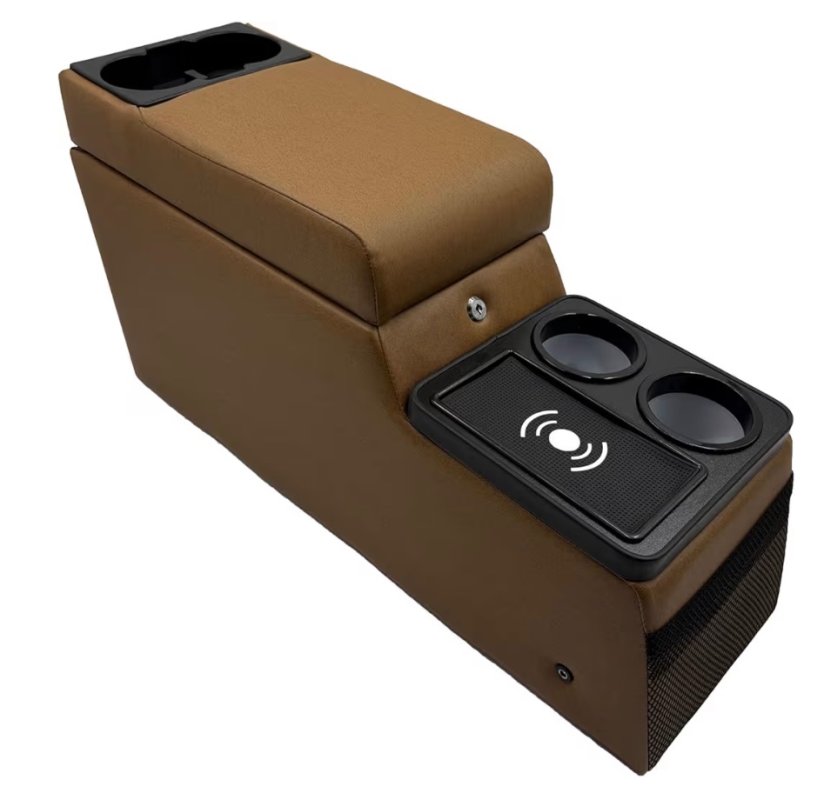
Today I ordered a set of tan seat covers for my 96 gmc truck with the 6.2.I also have a center console on the way with cup holders.I threw out the original tan Center console many years ago as it was in pretty rough shape so I tossed it.Both items are coming from Amazon.
 

Attachments

  • IMG_1790.jpeg
    IMG_1790.jpeg
    200.6 KB · Views: 5
  • IMG_1789.jpeg
    IMG_1789.jpeg
    109.6 KB · Views: 5
Today I ordered a set of tan seat covers for my 96 gmc truck with the 6.2.I also have a center console on the way with cup holders.I threw out the original tan Center console many years ago as it was in pretty rough shape so I tossed it.Both items are coming from Amazon.
You got a listing for that center console?
 
Please explain.
When you push in the clutch- that force against the clutch fingers is forcing against the crankshaft. Imagine the transmission, clutch and flywheel all attached but no engine. The flywheel is just going to move forward from the force and the clutch won’t release.
All that forward force goes against the thrust bearing.

Automatic transmission using a torque converter doesn’t create that major forward force.

Both styles will have the crankshaft floating and might contact the thrust bearing but not have all the force.
 
I understand the theory behind it with the crank essentially becoming the column but with the supports (bearings) being so close to one another, it seems it would be very difficult to determine a measureable variance over time between a standard setup vs. automatic. No argument on the point but just never really thought that much about it.

Maybe it is like an example of a 10 ft long W30x90 beam (30" tall, 90 lbs. per ft. for those unfamiliar and playing along at home) supported at each end. If a 3" long human hair is placed on the beam anywhere between the supports, the beam will deflect.

Calculatable? Yes. Does it matter in the grand scheme over the life of the beam? Not in this case.
 
I understand the theory behind it with the crank essentially becoming the column but with the supports (bearings) being so close to one another, it seems it would be very difficult to determine a measureable variance over time between a standard setup vs. automatic. No argument on the point but just never really thought that much about it.

Maybe it is like an example of a 10 ft long W30x90 beam (30" tall, 90 lbs. per ft. for those unfamiliar and playing along at home) supported at each end. If a 3" long human hair is placed on the beam anywhere between the supports, the beam will deflect.

Calculatable? Yes. Does it matter in the grand scheme over the life of the beam? Not in this case.
I have seen crankshaft end play over the factory maximum specs when dismantling an engine for rebuild.
Those all were with vehicles that had a manual shift transmission.
Units with an auto shift transmission were almost always within specs.
A couple were wore beyond the limits.
 
Eagle Watch texted me that I blew the fuse to the Transfer Case Control Module, so that is back to the before scenario with 2Hi, 4Hi and AWD all working, but still no 4Lo. I have two brand new AC Delco encoder motors, but they are set to neutral. Transfer case will not go into neutral. You have to move the shift shaft slightly to get the encoder motor installed, but once installed it just grinds on the parking pawl in the transmission and no go whatsoever. The old encoder motor does not do this, but it does not get me 4Lo. Would like 4Lo, but it’s not a deal killer.

So he’s down to installing the reman ABS pump module and getting that working, which will be nice. I did find the ABS pump module I harvested from salvage on the shelf in the Fullerton garage. Turns out it’s not the correct ABS module for the K2500 as they are specific. However it was the pump that was bad on my existing ABS pump module and I’m betting that pump is agnostic to truck model. In theory, I could swap that pump onto my old ABS Pump module and have a second back-up unit. We shall see.
Update: Wayne has the ABS working on the ‘99 Suburban. The ABS has not worked since I bought the truck in 2010.

The sole remaining thing to do is to get 4 Low working. My wife dropped off her 4Runner plus two new AC Delco Encoder motors for the ‘99 Suburban. Hopefully, he can address the shifting into 4 Low.
 
I have seen crankshaft end play over the factory maximum specs when dismantling an engine for rebuild.
Those all were with vehicles that had a manual shift transmission.
Units with an auto shift transmission were almost always within specs.
A couple were wore beyond the limits.
That's a design problem. There is a LOT of equipment in the wild that uses a clutch, such as about every ag tractor produced since the horse was put out to pasture. ...or semi, etc.
 
That's a design problem. There is a LOT of equipment in the wild that uses a clutch, such as about every ag tractor produced since the horse was put out to pasture. ...or semi, etc.
It is almost always a clutch that causes them to wear- Unless something drastically went wrong- sbc, bbc, 6.2/6.5 etc engines that are ridiculously high mileage - when it comes apart for a rebuild and it is an automatic trans, the thrust bearings are still well within tolerance.
On manual trans they will show the wear.

Honda is really known for wearing out the thrust bearings- you can get in a higher mileage Honda and watch the crank & balancer move with the application of the clutch. This is because many of their thrust bearings are not one piece with the main bearing but slip into place and only cover half the circle. Simply less material used so cheaper and they have all the main bearings identical instead of one with a thrust attached.

On semi trucks- especially Detroit series 60 is a good example - they (like most semis) are designed to do an “in frame” which is rering & rebearing with new cylinder sleeves and the block never comes out of the truck. But drivers who didn’t know how to float the gears who would use the clutch every time and a lot of double clutching… it wasn’t uncommon to drop the oil pan and replace the main bearings on a lot of engines because only the thrust was bad.
Detroit attacks this cost head on and instead of one thrust used two. And the thrust bearings snap in place onto the main bearing. So many fleets that had new drivers (ie JB HUNT) would drop the oil pan, inspect and keep running the main bearing but have to replace the thrust bearings. Detroit used this feature as a huge selling point for large fleets and it works.

In car/ pickup engines- they usually only get rebuilt one time then discarded. So replacing the main and thrust bearings all at once and as a one piece is normal. So most folks never notice.
 
Back
Top