• Welcome to The Truck Stop! We see you haven't REGISTERED yet.

    Your truck knowledge is missing!
    • Registration is FREE , all we need is your birthday and email. (We don't share ANY data with ANYONE)
    • We have tons of knowledge here for your diesel truck!
    • Post your own topics and reply to existing threads to help others out!
    • NO ADS! The site is fully functional and ad free!
    CLICK HERE TO REGISTER!

    Problems registering? Click here to contact us!

    Already registered, but need a PASSWORD RESET? CLICK HERE TO RESET YOUR PASSWORD!

My son's 1968 Chevy

are you sure your at TDC for firing? maybe 180* off
I will have to double check. I believe it is, but all I am going off from is the distributor rotor and the timing mark on the crank pulley. both the intake and exhaust seem to be at the same height.

I can try rotating the crank slowly and watch the push rod and rocker as it moves. will also check the others listed for when it's at TDC that can be adjusted as well.
 
I had joined on a C10 forum recently and mentioned that I was having trouble figuring out the valve lash on this engine. one of the guys mentioned to lookup Ken Ellison and how he sets hydraulic lifters on any engine. I did a search online and found this video almost straight away.

it explains a lot and makes sense. it's been too long since I have messed with older engines and been into them this far for me to remember what I was supposed to look and feel for! In his video he says it doesn't matter where the engine is at, TDC or not, to adjust to zero lash on each one and keep rotating the engine 90* and re-checking for lash. to do this for at a minimum of two revolutions of the crank. Then tighten 3/4 turn more and it's done!

I think I will try this tomorrow. only thing he mentions is to make sure the lifters are not pumped up. I need to check this before I start. I think this is the key and might be what I ran into with the first lifter. I believe it still has oil in it and is pumped up.

 
Posting this for reference on bleeding the lifters. I should be able to take one of the old push rods and place the lifter flat side down on my drill press and verify they are blead down or actually bleed them.

 
This would also verify checking if the lifters aren't stuck too. I was reading on another forum about a guy asking the same thing. he got a lot of flak for it, but in the end he tried compressing them and ended up finding two that were stuck. taking them apart and found the plungers froze up and just replaced all of the lifters.

being that I had three studs back out of the head and from the looks of it, the engine was ran with three rockers off the valves along with one of the old push rods looks like it took a beating, I might as well check this. I didn't see any damage on the flat side that rides the cam, but if the internals were damaged I would not know it.
 
I always disassembled them for cleaning & inspection. They hen reassemble andI putting them in a small bowl of oil and used a pushrod to manually pump them up and bleed out the air. I know a ton of people who soak them for a couple days before install- so I do that also
 
Unless the lifter is totally collapsed You are doing right.
The tension on the pushrod is normal.
Follow through with the rest of the procedure the after liquids is topped then fire up that engine.
After being assured that all is well, then back off the rocker adjusters one at a time, back off until they start to tap, snug down until they stop tapping then tighten the 3/4 of a turn and call it good.
 
Making some progress! after taking all of the lifters back out and using my vice and a small socket to bleed them, adjusting went smooth. They all were pumped up and once I had it a zero lash then went another 3/4 turn I saw the valve being pushed down. after bleeding them and going through the process of adjusting it all worked out perfectly.

I didn't put any sealant on the valve cover gasket face that meets the head just in case I need to pull it once we try to get it running. got most everything back together to the point I need to head to the store for some fresh oil and coolant. Among other items too.

I still have the fuel tank pulled out, we need to order a new sending unit for the tank yet. plan is to rig up a boat tank in the bed for now just to get it to run.

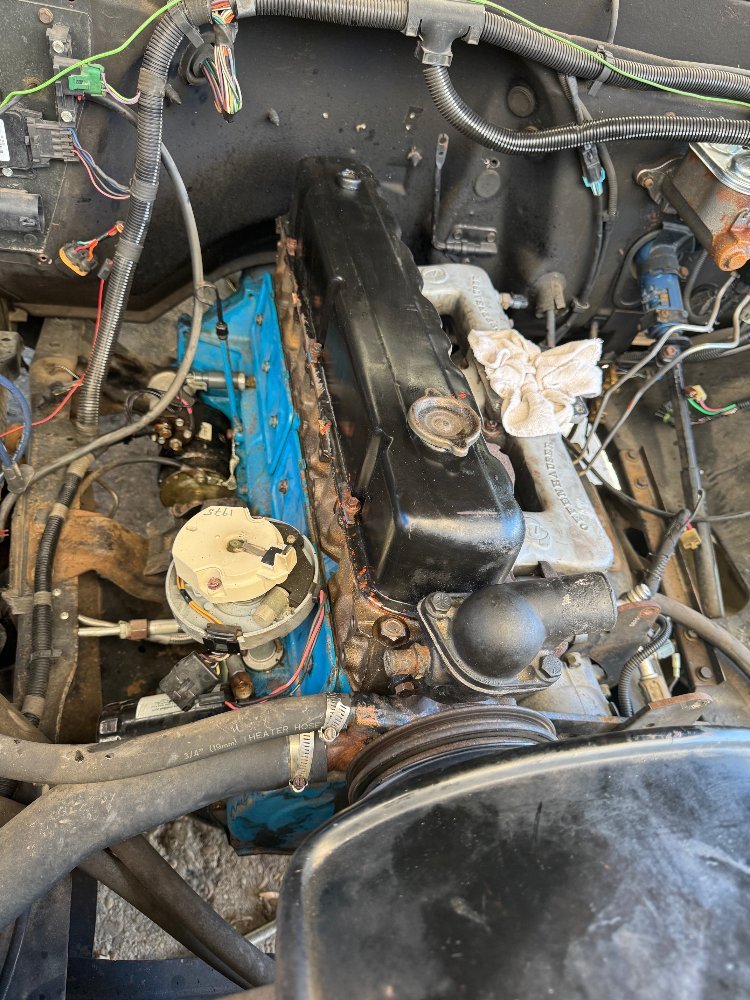
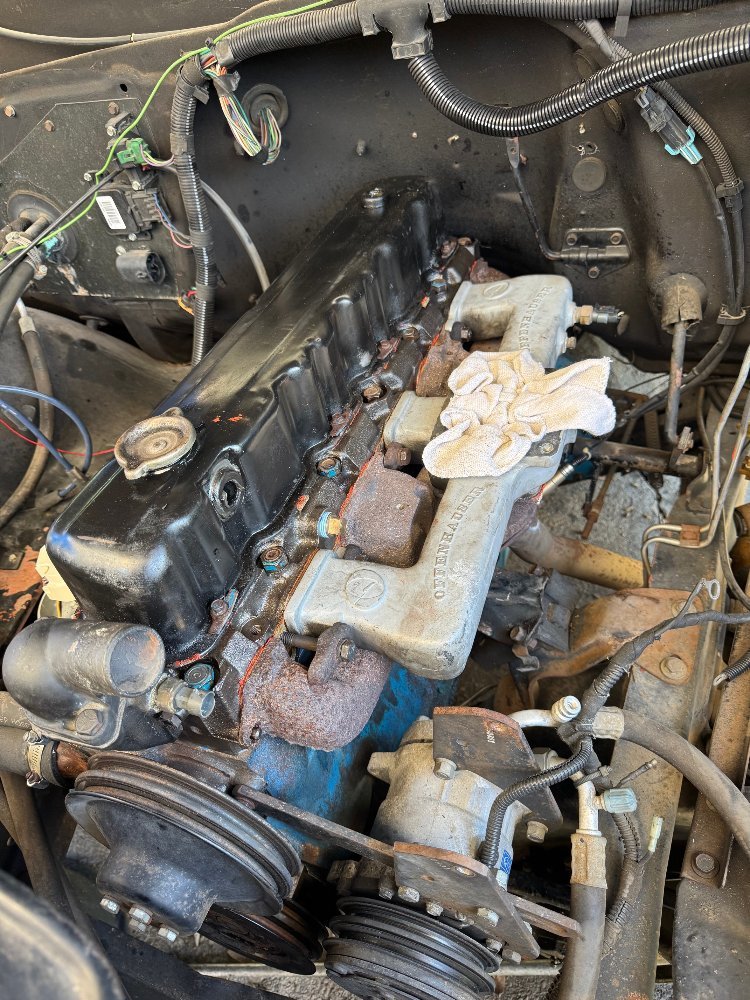
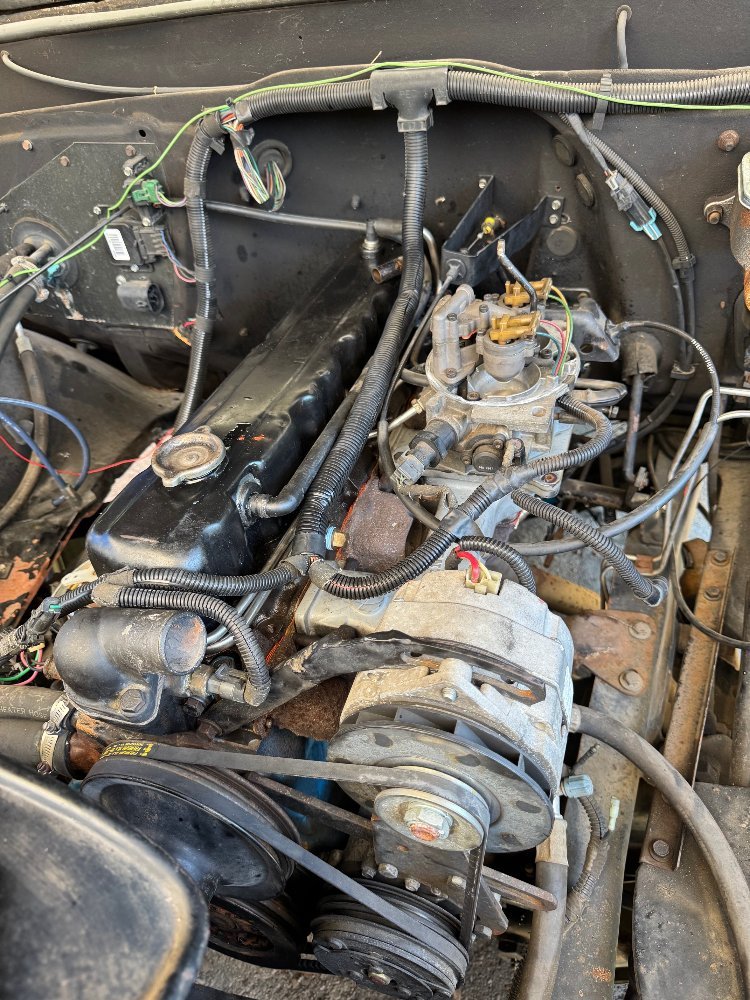
IMG_1445.jpgIMG_1446.jpgIMG_1447.jpg
 
Well fellas, it's alive!!! and it sounds like a sewing machine. so quiet. I can hear the injectors over the engine, on top of it running so smooth that 90% of all the rattles are gone.

we took it out for a road test and it's got more power now but I think it's running lean now. I had taken so much fuel out of the ECM tune trying to get it to run right prior to finding that it was only running on 3 cylinders. Now I need to load the old original tune file to it and see if it's happier now.

take off is decent in all three gears. the engine is so smooth that I could set a glass of water on the valve cover and it wouldn't shake at all nearly.

Here is a short video of it idling before we took it for a drive.

 
Thanks everyone for all the help and advice. I ended up just using the lock nuts the machine shop provided although that one that I was worried about backing off is easier to turn than the others. I may just pein the nut at the threads to help lock it in better.

Tomorrow I have to pull the valve cover back off and seal it up since I didn't apply any sealant to the bottom of the gasket, it's leaking. I also will most likely do the same for the lifter covers too, I didn't replace the gaskets for them, just carefully pulled them off without damaging the gaskets. I have new ones, but these were still very pliable. most likely just add some sealant and they will be good to go.

We gave it an oil change using Valvoline VR1 racing oil that already has a high zinc content instead of standard oil and getting the additive. fresh green coolant. and to get it up and running without the fuel tank installed, we rigged up a boat tank in the bed and ran hose to the pump on the frame. had to drill a hole in the boat tank cap and run a return fuel line also.

Now my son is talking about maybe trying to use that turbo 400 trans I got with the 6.2 diesel I brought home. I need to verify it will bolt up to the engine along with if the torque converter will work for it too. then the hunt for a yolk to fit the trans will be needed to make a new drive line or modify the existing one.

If others have any info on using that TH400 let me know.
 
Sounds good man.
Yes- the head cracking prone 230 & much improved 250 came stock with the manual, powerglide 2 speed or the TH400 is same as far as bellhousing and such. Torque converter- idk about that. It will bolt up, but idk if the stall speed is the appropriate one to use.
Make sure the flex plate you buy is a 250 not a 230- there was some kind of difference but I can’t remember what it was.

Love the 400- still remember the ratios- 2.48, 1.48, 1 to 1.
Beat it hard and it laughs at you.
 
I was looking online on how to find what the rear axle ratio is, there isn't a tag on the diff cover but it is a 12 bolt. I know he won't see any difference on RPM's for highway since the 400 doesn't have an overdrive but if the axle ratio is decent, he won't need the OD.

also thought about searching for a 200r4 or a 700r4 but he's about out of extra funds but he's happy it's back up and running again.

Something we both noticed since it's running now is the engine temps. it's not overheating but before all this started with the head and rockers it would idle and the electric fans would cycle on and off but take a bit for them to come back on. now it seems to stay almost always on. it will cycle but the fan will come back on within a minute or two vs about 5 minutes before. when we started driving up and down the street (didn't go far) the temp stayed down low enough the fan never came on.

I chalked it up to all 6 cylinders are now building heat vs before only three were actually firing! fan will cycle on at 200 degrees and off I think at around 185-190 which is set in the ECM. Don't know if these old engines are ok running with the 200 degree temps and using a 195 t-stat or they are better off with a lower temp stat.

I told him that the fan isn't pulling enough though to sustain for the AC. we will need to put a second fan pushing from the front on the condenser. I could also look for or try making a fan shroud and put an actual fan and fan clutch on it and replace the electric fan with a push fan to put in front of the condenser. iirc these trucks didn't have a fan shroud but only the top guard that it has to keep your fingers out of the danger zone.
 
Back
Top