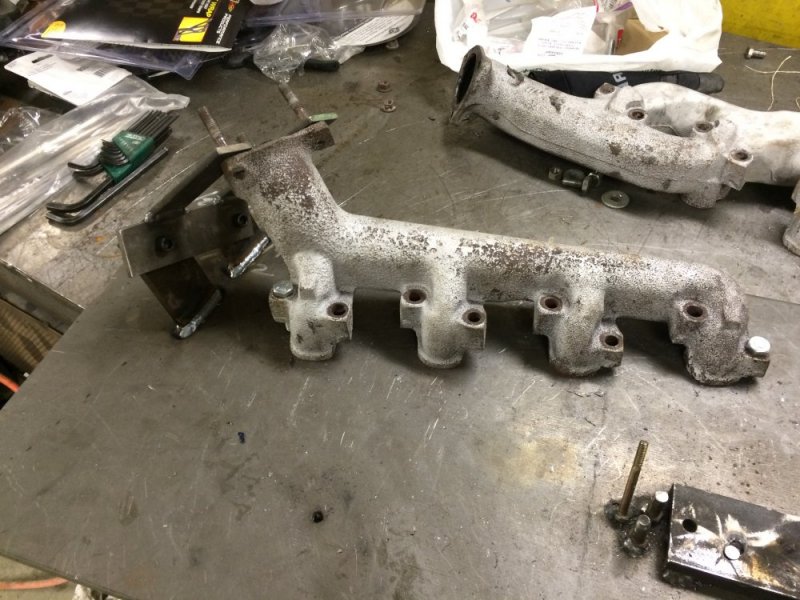
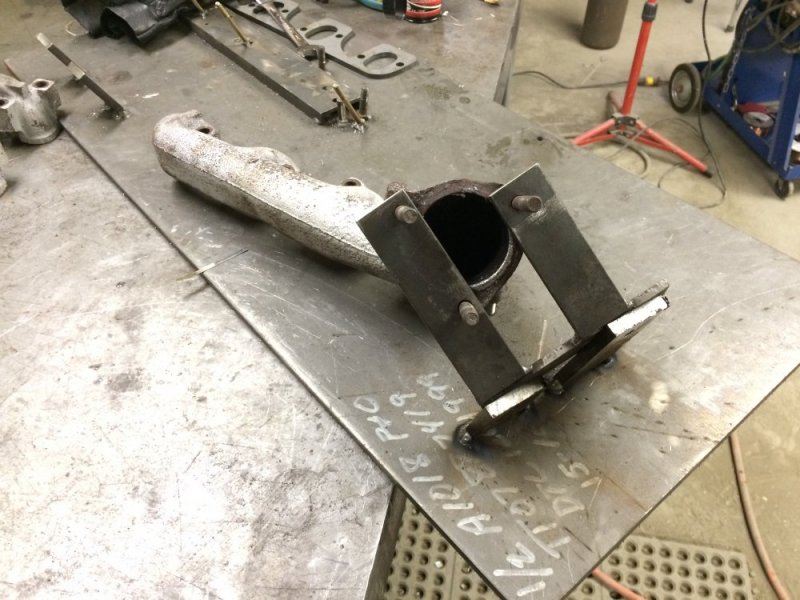
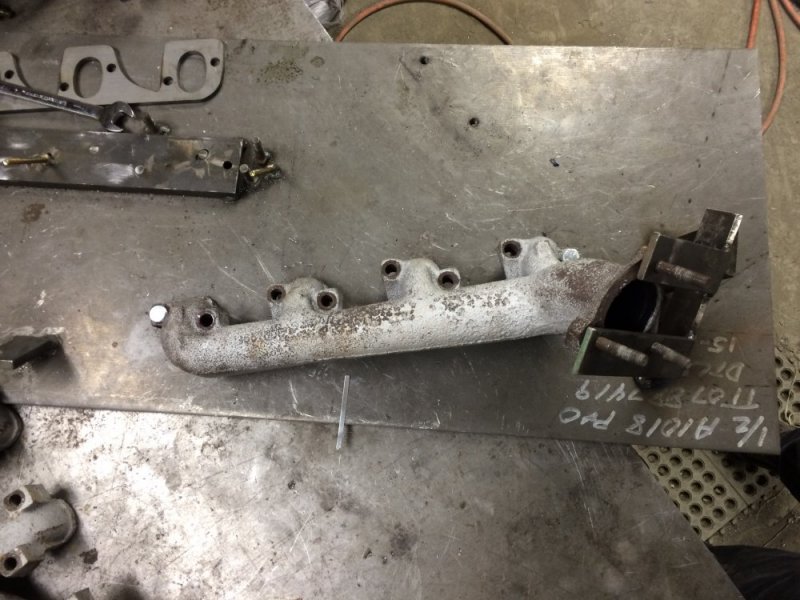
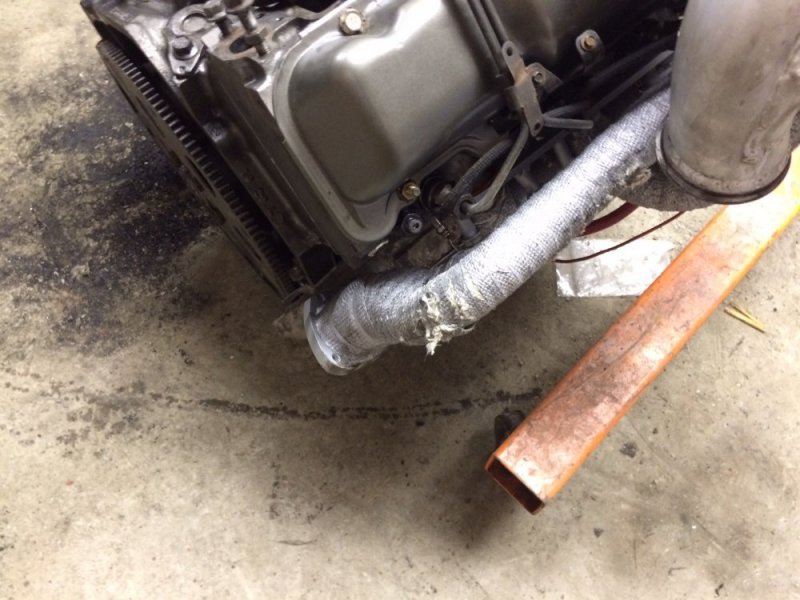
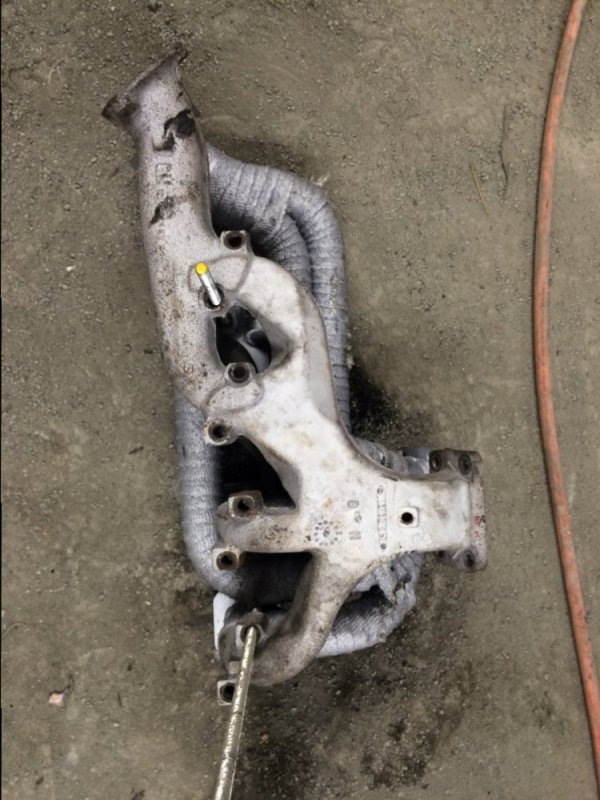
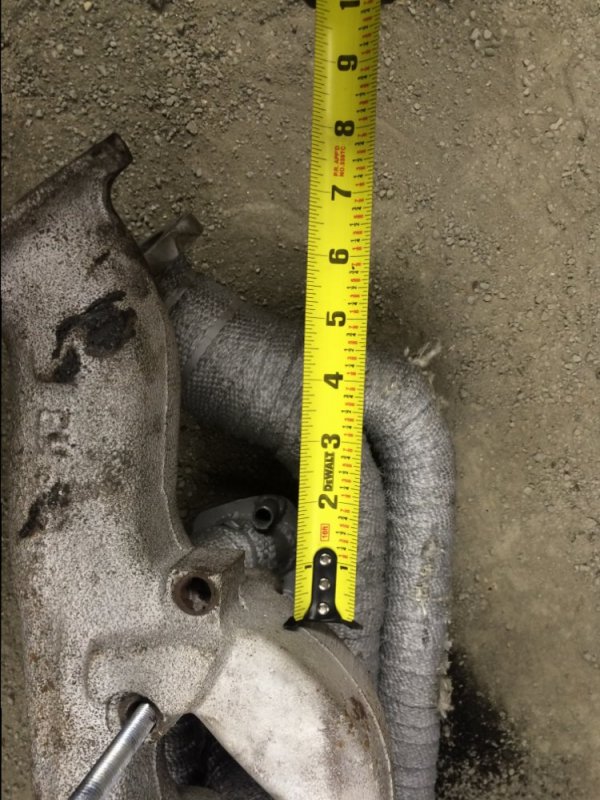
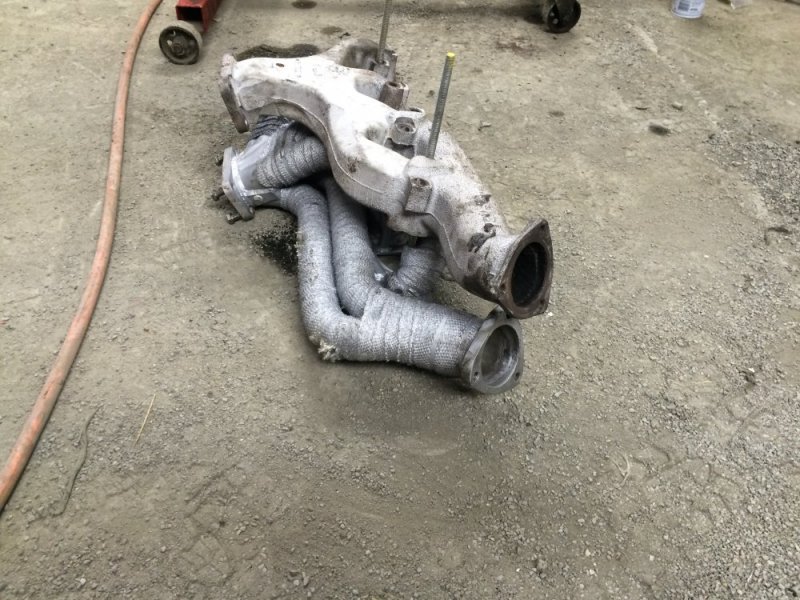
,The big factors are surface prep & application. Both of which can be tricky on used, rusty, cast iron manifolds with lots of nooks-n-crannies. I've coated many cast iron & smooth tubular pieces over the years.
When doing a long time rusty cast piece, after thoroughly (and I mean thoroughly!) abrasive blasting, there will still be tiny oxidized pinholes. Coated right, it takes many years, but the tiny bit of rust in the pinholes may come back. Chem baths can help to further dissolve pinhole rust. Iron phosphatizing (sometimes referred to as "pickleing") can help. Probably the biggest factor is having the entire surface smooth enough that once coated, the surface of the coating can be polished smooth/shiny. It's the aluminum particles in these coatings that provide corrosion resistance.
A complete, consistent aluminum coverage oxidizes over and stops further oxidation (aluminum's oxidation process is essentially self-sealing/self-limiting). But surface has to have complete aluminum coverage. If high & low spots remain (common in rough castings), the Al will get polished off the highs, & the lows don't get smeared smooth/consistent - and that's where any remaining rust pinholes will get thru.
Smooth a new manifold or turbine housing, coat it right, and it'll last. Smooth exhaust tubes are easier.
The second thing is applying the coating at recommended thickness. Easy on a flat surface. Much trickier with lots of nooks-n-crannies. Takes practice to get enough material in the nooks, without too much material on the surrounding, easily accessed areas. Get the coatings on too thick & they'll delaminate (flaking off). I set the gun to spray the minimal amt of material & then focus on the nooks, slowly getting them covered.
Third thing is keeping the material mixed while applying. The Al particle don't want to stay suspended, so mix the heck out of it to get it uniform before pouring into gun. Then keep it agitated every few seconds in the gun. If allowed to set, the Al particles quickly settle to the bottom.