Same subject is on Hummer forum. This is my copy/paste from there:
So far im at 4 pms, 3 texts, 1 phone call about “I am” or “should I” go back to chain…
This is the first set of failed gear drive I have seen in any 6.2/6.5 . I have no vested interest in these being in existence or not. My personal experience is they are worth a long term investment in time & money. If there is any pictures of others that failed- I and plenty of others would like to see them. What I see is that either the mechanic didn’t have proper install instructions or didn’t follow them. While that is opinion, i have seen this type failure before on sbc and bbc engines. The popular thing on those was a chrome timing cover thats very thin metal and they usually start leaking oil as they damage the cover much easier. So seeing gear drive failure is not new to me.
It is definitely more work to properly install the time keeper set. Adding them is a decision to do a lot more work on day one with the intention of never touching the cover or gears again. The alternative is periodically replacing the timing chain & gears set like is done for timing belts in newer cars.
If I misled anyone that these are slap in & go, I apologize. They definitely are not to be treated that way. I know talking to friends of mine that we grew up together we actually say “slap a set of rings & bearings in…” but never is it just that. There’s a ton of little things that always goes along with it. Like telling my kids when they were young to “get dressed by 7am” I fully expect them to shower, brush teeth, etc. and never think twice to explain fine details.
How often a person needs to replace the chain changes on their use. If a guy has a stock engine, has a hmco, never tows, and a ds4 ip- drive it and ignore the timing chain for 150,000 -200,000 miles.
Different things all increase the schedule for replacing it. The more there are the sooner or the higher the risk of issues.
Heavy loaded; heavy towing; higher speed driving which requires higher rpm; offroading where high rpm is used; where “feathering aka jabbing” the throttle is used frequently; pushing the engine for more power; reworking/ replacing rocker arms for higher ratios; replacing camshaft for more lift or extended duration on the intake valve; changing cam timing;
I’m sure there is a few more but this should get the idea there.
People with db2 should readjust their injection timing every 30,000 miles. That’s about a normal rate for a chain to stretch. When the ds4 was designed, the timing issue was a known problem, remember GM once had an option you could pay for 100,000 miles warranty. So they had stanandyne build in a timing corrective feature that helps with this. It doesn’t solve it but masks it enough that 99% of owners can’t tell the difference. But by the time you put 90-100k on, anyone driving a low mile engine then drive the other will notice somethings off.
In the fleet of 6.5 trucks, many of the trucks were used like a car- simply transported a driver and a couple hundred pounds of material or money is all- and those trucks simply had to have the scanner plugged in and do a retiming while we did other maintenance. Because of the scheduling where we replaced belts, hoses, etc at 100,000 mile intervals- we retimed all the trucks where we weren’t doing testing regarding the timing. No difference was felt by these drivers.
But drivers who worked the trucks- service body one ton full of tools & parts, guy that towed stuff around, office personnel who had company trucks and towed boats & campers often- They would notice the difference right away.
We saw the difference in tracking the fuel consumption. All vehicles had miles reported every fill up.
On trucks that we left the stock chain in for its life in the testing- power and mpg were very noticeable drops by 250,000. For the studies, we were doing emissions testing before it was a requirement to smog diesels here. By 150,000 it made a noteworthy impact. By 250,000 it was enough to make what now fails a truck to pass. I cant remember for sure but think it was close to 15% in fuel efficiency drops.
The question came up on TTS, why did the mechanic mess with timing cover when swapping waterpump. Idk that but I will tell you it becomes standard practice for this engine, & I will always recommend: when someone changes a waterpump on a 6.2/6.5 to replace the timing chain at the same time. The labor isn’t a ton more, the part is low cost. So waterpump, chain, front main seal, and if anything looked less than perfect the cps also -was all done at once in my shop.
There are guys running a lot of power in these engines. I ran them and had timing chains. By time you are 275hp, you loose the option when to change the chain. It is an abused part. 75,000 miles and injection retime interval is 15,000 miles db2, 30,000 ds4.
Anyone doing anything with valve timing- 1.6 or greater rockers, cam timing, camshaft, etc. I learned to just replace the chain every 50,000 miles.
On my race engines that were high rpm- the #1 cause of failure was valve to piston impact. Those chains could not handle 5 miles of dragstrip. I was buying just chains before GM sponsored me. 4-5 passes and the chain was stretched to the point of noteworthy power loss.
That is why I took some Pete Jackson gear drives and tried finding a solution. By redoing a set of Pete dog bone, and a couple custom machined cam& crank gear, I did my own set.
Gear drives steals a few hp on a new engine. By the time you have 75,000 miles on the chain you lost more than the gears will have and thats if you retime your injection. I know the dyno numbers show that. What I never tested was how much power loss is offset by coating the gears with the friction modifier coating my guess from seeing the numbers on industrial equipment is the power loss should be negated, and unfortunately no- coating timbing gears for a chain doesn’t help- it’s been tried.
I have sent chains to chryo treatment. It barely made any difference, if at all.
People send their gear drives in for chryo and about 90% claim worth it.
But these are lightend gears- definitely not the heavy cam gear of Leroys/Dsg.
If this engine was a 7,000 rpm engine the cam gear weight would be an issue. But 5,000 rpm engines do fine with this weight.
The loss of chain slap is a far greater improvement than rotating mass from changes when feathering/ jabbing the throttle.
If a person isn’t sure- then go into detail with your build and everyone can chip in opinion of good and bad for a particular build.


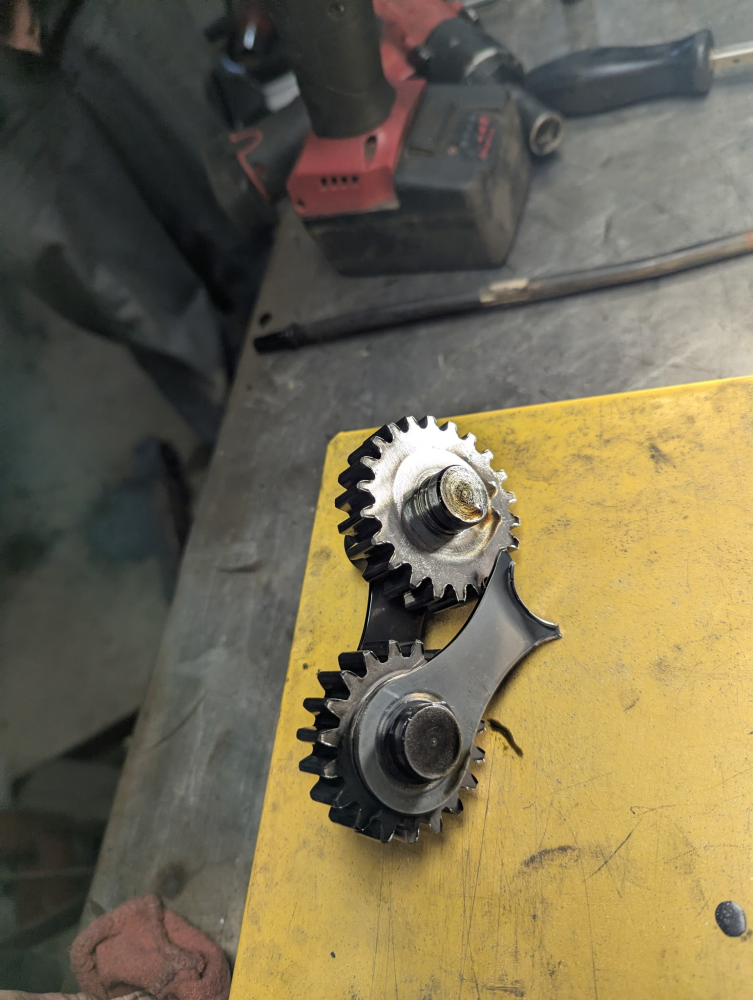


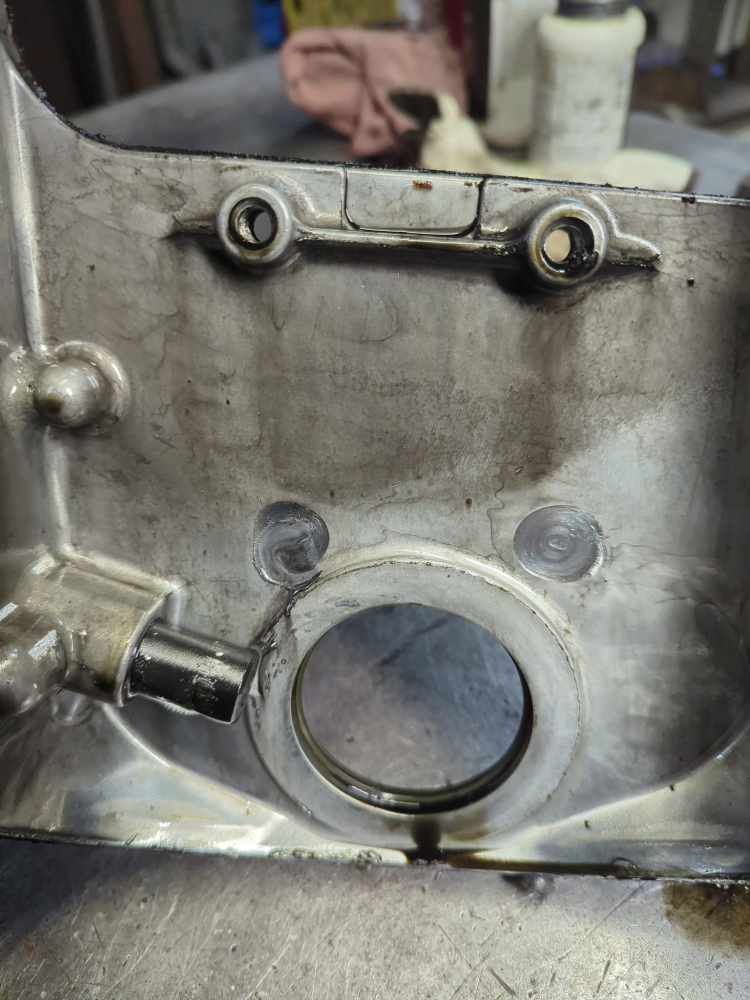


 Not hard you just tear EVERYTHING off the front of the engine because it all has an attachment to the waterpump. The bar is set low enough by GM as it is with nearly 1" of chain slop allowed. No need to drop the bar to the ground with "Like a Snap!" criteria.