
Husker6.5
135' diagonal 16:9HD, 25KW sound!
Major bummer, man! At least it got to grace the pages of DieselPower. Definitely curious as to what happened. Rod bolt fatigue, rod saddle fractured, cap fracture, beam fracture?

Follow along with the video below to see how to install our site as a web app on your home screen.
Note: This feature may not be available in some browsers.

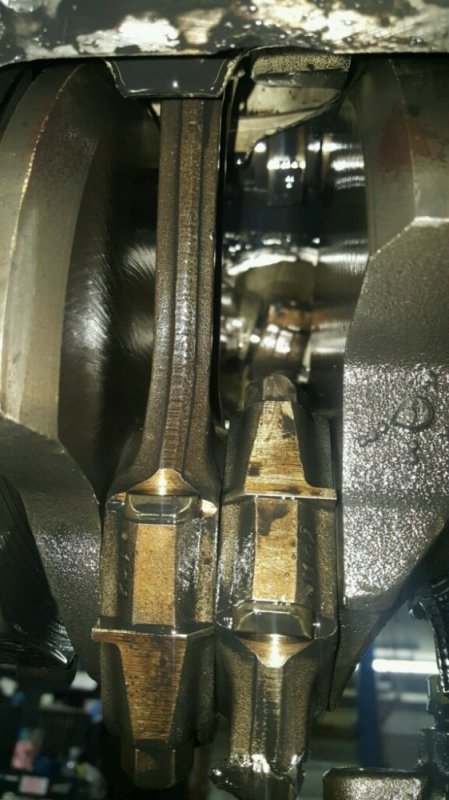

Is the rod next to it bent, or is it just the picture making it look funny?I spy with my little eye, a snapped connecting rod on #8. Crank is oddly just fine, though a small chunk did get taken out of the side of the block. I am going to talk with my engine building and see if we can't sleeve it. I doubt it though.
View attachment 49459 View attachment 49460

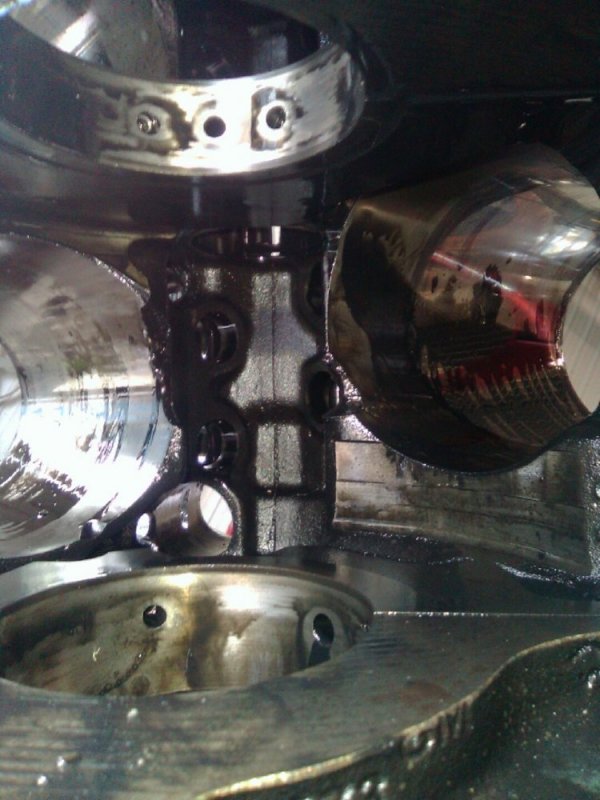
So is the initial diagnosis hydrolock? Have you done any inspecting of your injectors? It seems hard to believe that a leaking injector could dump enough fluid to hydrolock a cylinder at speed....but what else could it be? Your head gaskets looked ok?UPDATE: I tore it completely down this weekend. #7 had a small nick out of the bottom of the cylinder and #8 had a larger chunk. I talked to my engine builder who said #8 will have to be sleeved and #7 should be ok as is. Crank and block will get mag-flux'd and mic'd. There was absolutely so sign of anything that would have caused this failure. All bearings, valves, everything was perfect. Even the broken con rod spun freely on crank still. All mains fine. Cylinders still had amazing cross hatching in them for 100K miles. View attachment 49763

 I wouldn't bother putting a gear set on a 350 or 454, but, I get sick of low mile stretched out chains on the 6.2/6.5 esp with how deeply buried they are in the front to get to. I dread the job Patch needs from both the IP and chain slop making it a fogger on start up in our warm weather. Patch doesn't have that many hard miles on the chain! Gear set in stock ready to go on the moment the 1992 project gets out of the garage.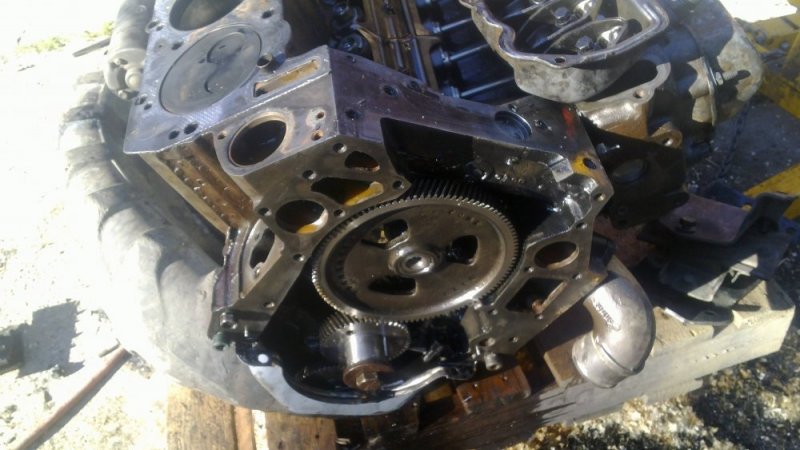
Oh man, that sucks. Sorry to hear about that.Meaningless at this point, block got flux'd. It's toast. Looks like I am heading back to the 599. Who knows. Got a lot of decisions to make
