• Welcome to The Truck Stop! We see you haven't REGISTERED yet.

    Your truck knowledge is missing!
    • Registration is FREE , all we need is your birthday and email. (We don't share ANY data with ANYONE)
    • We have tons of knowledge here for your diesel truck!
    • Post your own topics and reply to existing threads to help others out!
    • NO ADS! The site is fully functional and ad free!
    CLICK HERE TO REGISTER!

    Problems registering? Click here to contact us!

    Already registered, but need a PASSWORD RESET? CLICK HERE TO RESET YOUR PASSWORD!

Possible Engine Build for my 93 Truck

Thanks Will. I will take another look at #3.

are the felpro head gaskets better to use than the full composite ones like Mahle shows? and if going with the +.010 thicker ones, will that harm the compression ratio or have a power/economy loss over standard?
 
I managed to get all of the valves lapped on one head this evening and almost all of the springs and all cleaned up using my ultrasonic cleaner. I still have 6 more valves, springs, and all yet to clean.

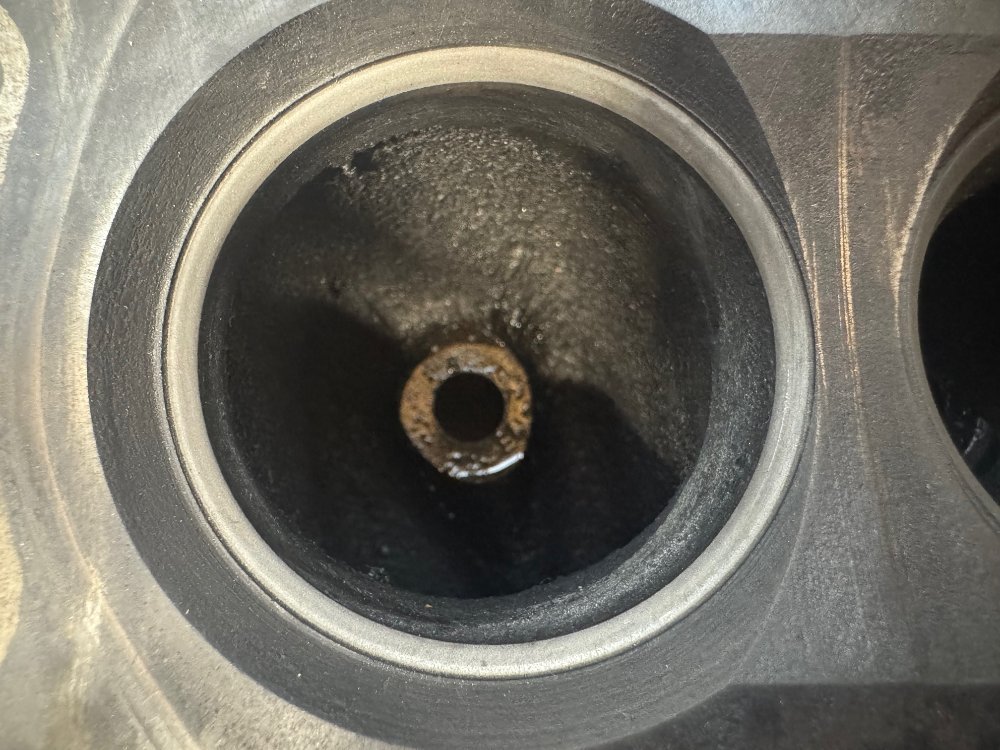
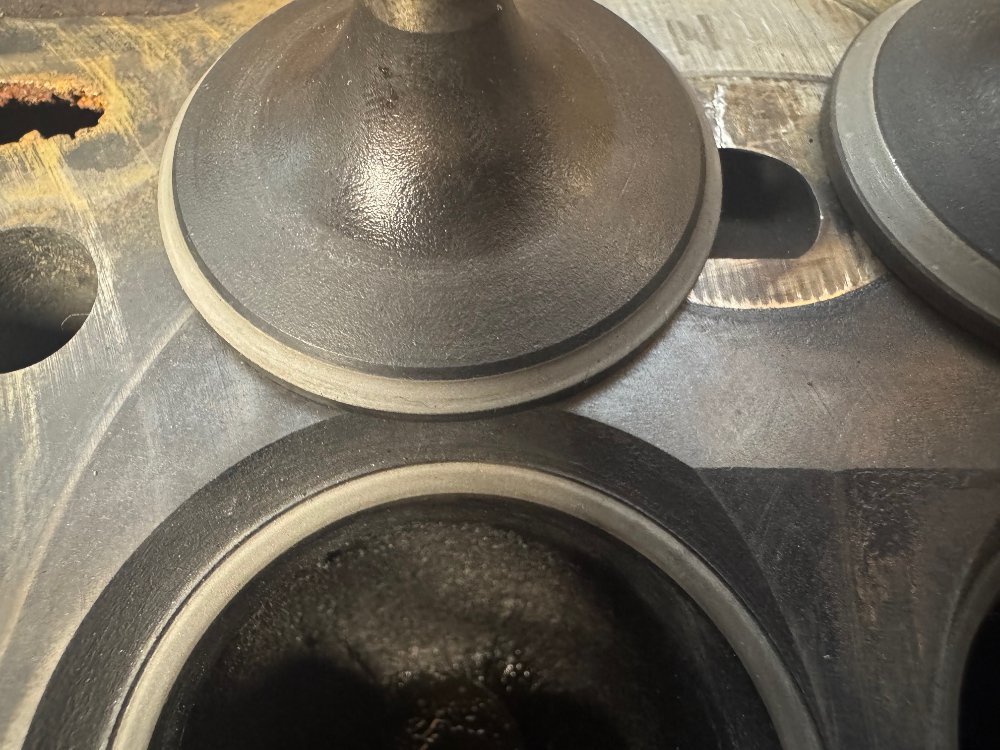
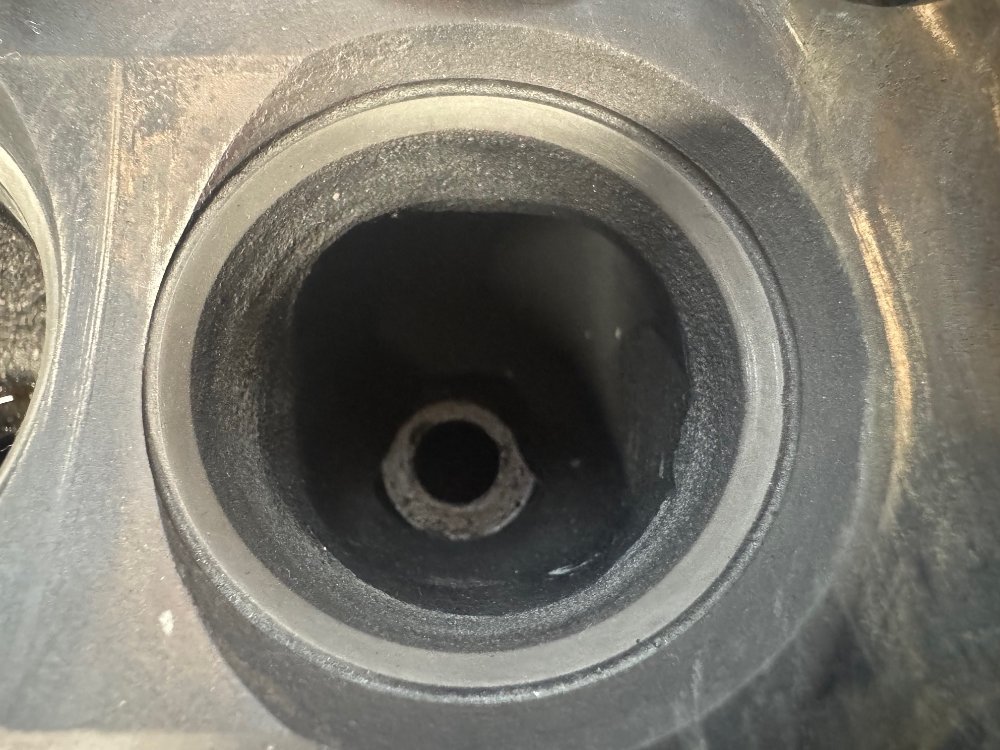
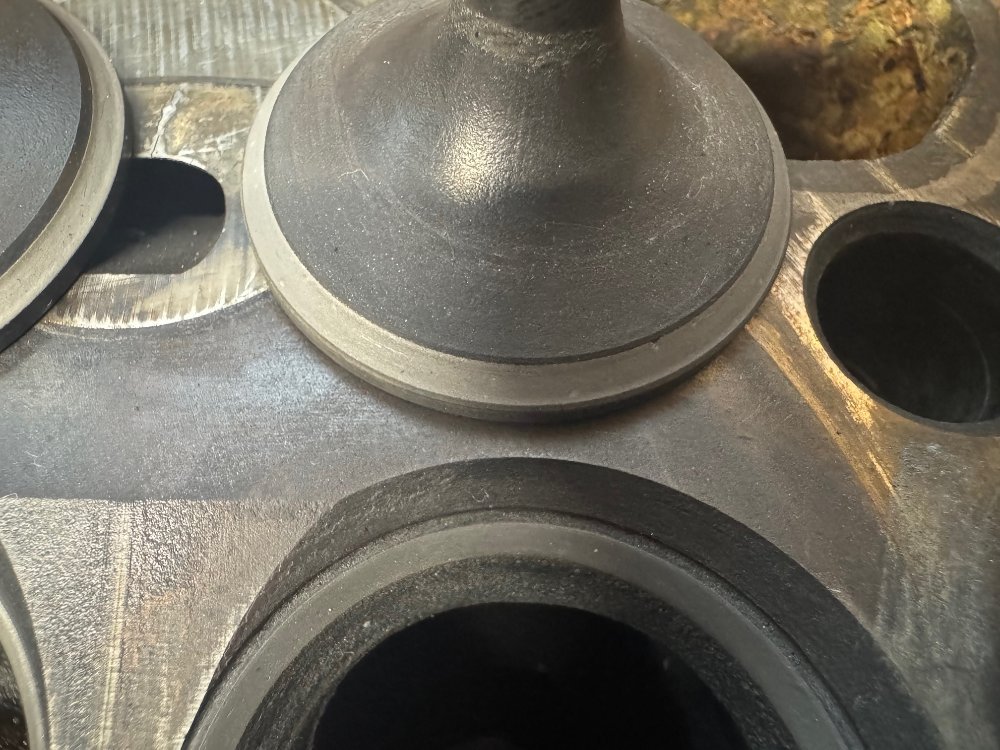
a couple of the valves have a small amount of pitting on them, but they cleaned up and lapped well. I may go back and do another round on them tomorrow to see if I can get all the pitting out. it's only a single pit here and there so there not bad at all and I think they will seal up as is. all of the valve seats cleaned up and lapped just fine.

I was thinking also wondering if I should try and polish lap them. I watched one of the youtube videos where a guy used some auto paint compound and polish to lap them and give them a machined polished look. I do have some jewelers rouge bars that I was trying to use to lap injector nozzles. would that be a good idea to try and polish lap the valves as well?

Right now I am thankful that I have been able to get this far with the heads from that other 6.2 and not have to hope the heads on the old worn out 6.5 in the 93 are good. plus I won't have to tear it down when I pull it.


I had my wife stop by harbor freight to get me a set of small wire wheels and a can of wd-40 (I ran out) along with a roll of shop paper towels. I plan to use the paper towels to wipe all the gunk out from the cavity where the lifters are in the block. I really don't want to wash it with too much cleaners and wash all the oil from the cam or crank bearings.

I also used one of the wire wheels and chucked it into my bench top drill press to assist with cleaning all the carbon off the under side of the valves as they came out of the ultrasonic cleaner!
 
I found a set of the o-ring type valve stem seals on the jungle site that I can have here by Monday, so I ordered them so I can at least get the heads back together hopefully by the end of this weekend. (I'm off on Monday's now from work)
 
@dieselolds I ordered one of the kits you linked for the IP. are there any special tools I need? like a tool or sleeve to install the shaft umbrella seal?

I saw these looking on amazon, but idk if I need one or if these are right for my IP


Last edited:
I saw one of you guys mentioned filling the intake/exhaust ports with fluid to test if the valves are sealing up after the lapping job. I was thinking about some way of a preliminary test without making a mess like maybe applying air pressure into the ports.

I have made rubber tips for my blow gun in the past using my 3D printer, I wonder if I could print one large enough to seal on the ports and apply air pressure along with a squirt of soapy water on the valve face. I will also need to block off the EGR port on the head too.
 
I always just poured some sort of household cleaner into the ports.If nothing runs out the seal is okay.The valves should not leak.You could make a test plate if you wanted and induce air into the port.Either way will work out perfect.
 
I guess I need to get a little more evasive on the valve lapping... I made an adapter to fit my blow gun and seal up on the exhaust port on the head. (still working on one for the intake side) installed a valve, spitzed some windex on the valve face and gave it some air. I had leakage all the way around the valve even at just a little pressure.

when I start lapping using the hand suction cup tool, I have been applying some assembly lube on the stem and a small bead of compound on the valve where it meets the seat. then I start the lapping like I'm trying to start a fire only slower and without much if any pressure. within a couple of minutes the compound turns from a dark grainy (course) texture to a fine like thin paste and the grinding sound goes from "you can hear and feel it" to a smooth semi-scratching almost quiet sound along with I can't feel it cutting anymore.

Am I doing this right? should I be applying more pressure or something?

from what I can tell, the compound it's self seems to be breaking down from coarse to a fine compound under the valve and seat. it turns light grey and almost has the feeling of a watery flour paste. it comes out of the tube feeling like the sand off sand paper mixed with some oil.
 
I am thinking of maybe trying with my cordless drill on the slow setting. the suction cups will come off the stick, so I can put a short dowel in one and chuck it to my drill.

I also have some jewelers rouge if that would work better.
 
Thanks Will. I will take another look at #3.

are the felpro head gaskets better to use than the full composite ones like Mahle shows? and if going with the +.010 thicker ones, will that harm the compression ratio or have a power/economy loss over standard?
If doing head studs it matters to NOT use the felpro if doing the silicone to seal the stud threads. Using head bolts- doesn’t matter which, they are both good.

Yes the thicker gaskets will drop compression a small amount. But because you are not surfacing the heads or block deck- there is a higher chance they are not perfectly level. The thicker head gaskets help that situation a little bit. It isn’t a guarantee that they will seal but it help a little bit.

It’s a trade off on compression because we already know your compression was bad from the valves- but it is unknown how bad the ring/ cylinder wear and blow by is from the lower half. So whether to use the thicker ones is a coin toss which is better for you. The ten thou thicker is the standard because that is how much is standard to shave block and heads by (5thou each) and it restores compression to original. I don’t recall off hand how far the compression ratio drops.
 
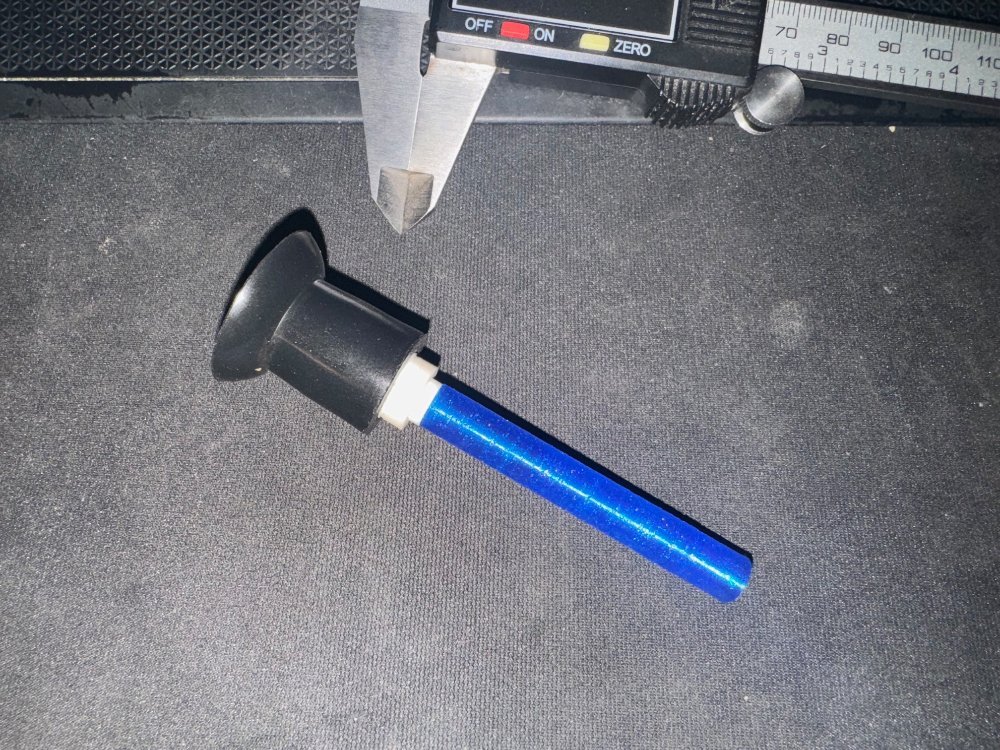
I came up with this doohicky that fits the rubber suction cup. the blue stem is made from a flexible rubber filament. it sort of acts like a rubber hose so I can chuck it into the drill.

Hopefully this will help. I was also reading online about lapping valves and what causes them to still leak after lapping. I found one comment about the possibility of some of the grit still on the valve and seat. I only wiped them off with a rag. maybe I need to use some brake cleaner too.

are there any pros or cons of trying to also polish them after lapping? one of the videos showed a guy using automotive paint compound and polish and gave them a shine like they were before lapping. the seat and valve ring looked like chrome when he was done.

IMG_1418.jpg
 
Back
Top