• Welcome to The Truck Stop! We see you haven't REGISTERED yet.

    Your truck knowledge is missing!
    • Registration is FREE , all we need is your birthday and email. (We don't share ANY data with ANYONE)
    • We have tons of knowledge here for your diesel truck!
    • Post your own topics and reply to existing threads to help others out!
    • NO ADS! The site is fully functional and ad free!
    CLICK HERE TO REGISTER!

    Problems registering? Click here to contact us!

    Already registered, but need a PASSWORD RESET? CLICK HERE TO RESET YOUR PASSWORD!

My son's 1968 Chevy

It all depends how much $$ you have for it. Do everything now and it all lasts longer.
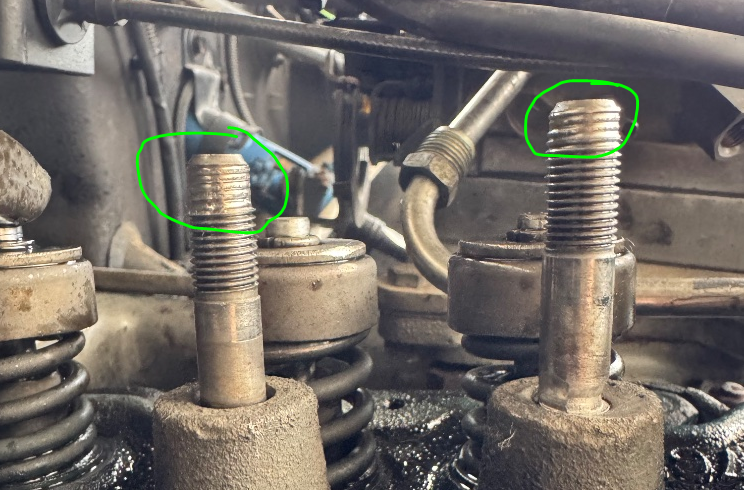
Or save $$ and diy the studs. Taping cast iron isn’t that hard. The holes are going to keep the tap straight.

Plugging up the oil drain holes to make sure no metal shavings go down inside isn’t too bad.
 
I talked to my son about it and he’s onboard with sending the head to the machine shop for the repair. Also to pull the engine out and inspect everything else. I’m not too familiar with these engines to know weather or not having three dead pistons slinging around would cause any damage.

I know some will some won’t. Having it out on a stand will make things easier to work with.
 
I think those threads pealed off when I removed the rocker nuts. the nuts that are on the engine look different than what RA shows on their site, so I am questioning if they are the right ones. everything is getting replaced soon as I can get the head off and to the shop. hopefully that will be this weekend, have it off and ready to deliver to them on Monday.
 
Get the book.
Thats the advice that I give to everyone.
An original OE overhaul/repair book is the best, but having a Haynes book setting there can also be mighty helpful as they sometimes shows short cuts that can be done without costing in damage.
And, AFAIK, those head bolts are reusable.
 
Well guys, here it is.... the teardown pics.

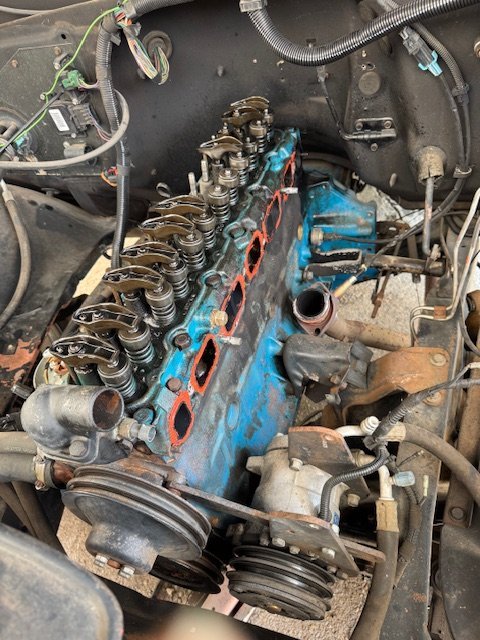
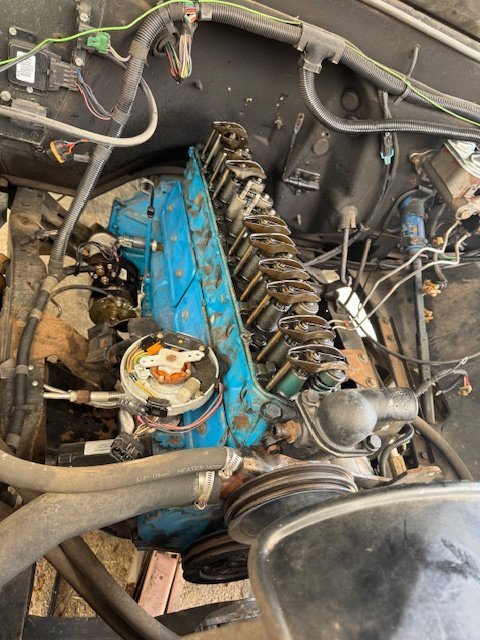
Intake and exhaust removed
IMG_1249.jpg
IMG_1250.jpg

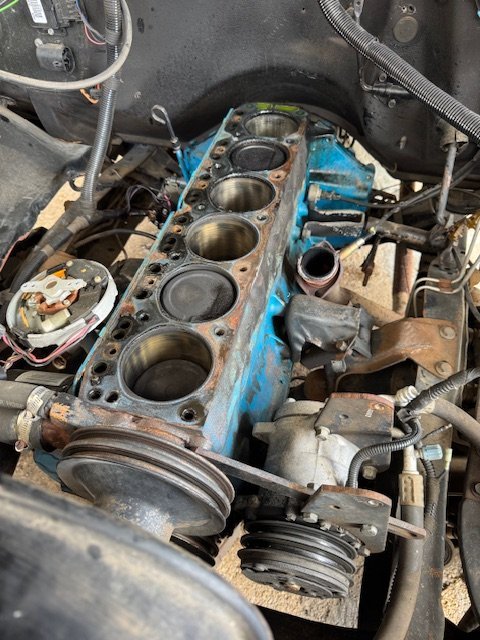
Head it off...
IMG_1251.jpg

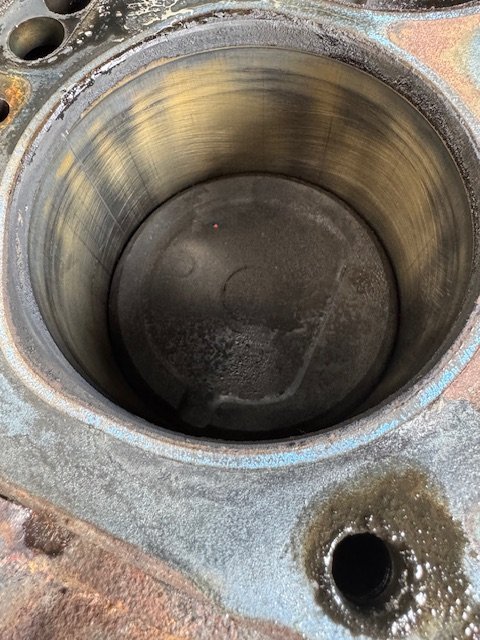
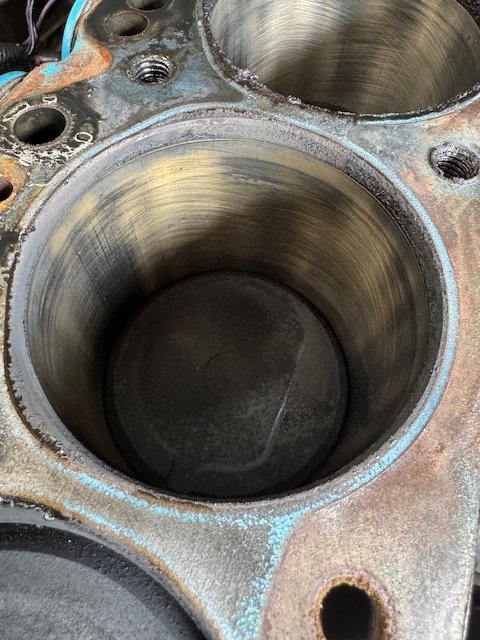
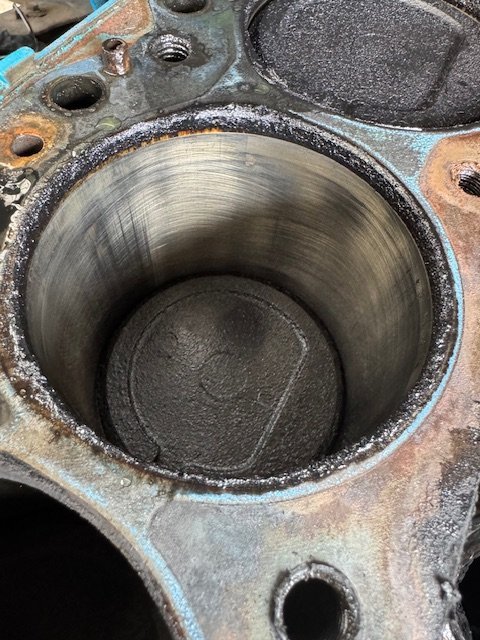
#1 cylinder
IMG_1252.jpg

#3 cylinder...
IMG_1253.jpg

#4 cylinder... this one had zero compression
IMG_1254.jpg

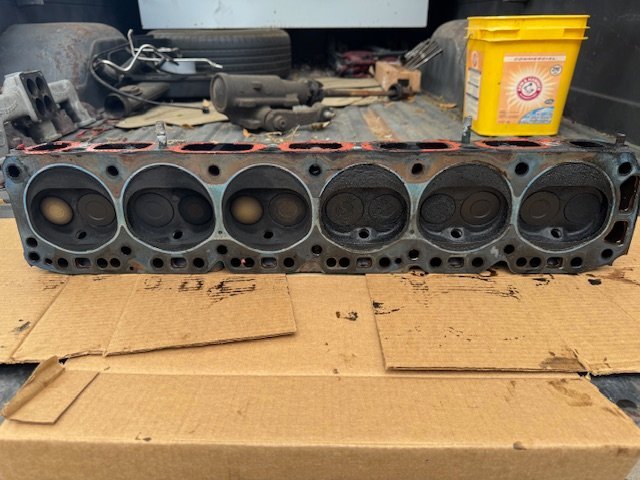
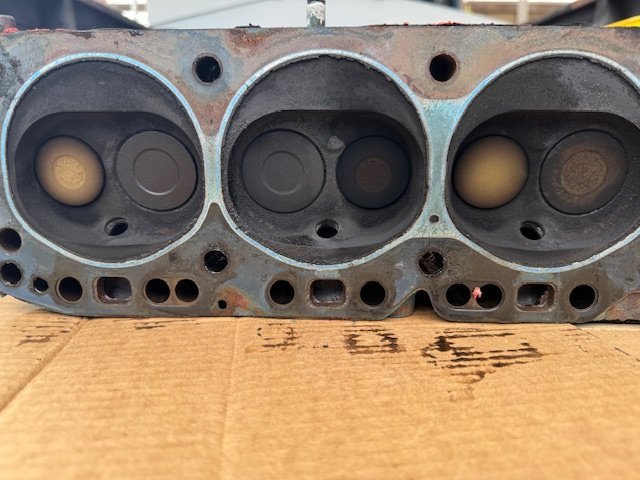
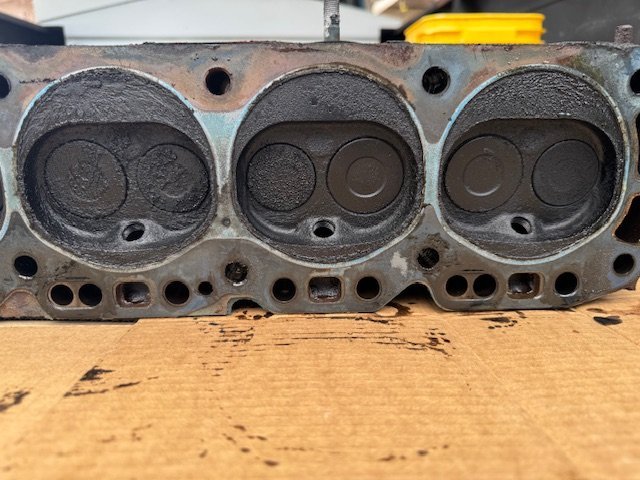
The Head... #1 on the left
IMG_1255.jpg

Cylinders #1-3
IMG_1256.jpg

Cylinders #4-6
IMG_1257.jpg
 
I still need to clean things up to remove the carbon deposits around the top of the cylinders and clean up the surface, but there is no visible evidence of any valves contacting the pistons. I was really worried about #4 since it showed absolutely nothing on the compression tester. #5 and 6 only had 60/70 but all three had the rockers off the intake valve and push rods. I guess #4's intake valve it perfectly sealed shut not allowing any air into the cylinder.

the head also looks crudded up on those three cylinders with #4 being the worst. there is also oil that was pooled up in the intake ports of the head too, so it needs new valve seals at a minimum.

I will pick up some barrymans B12 to desolve the crud on the engine block and get things cleaned up while the head is at the machine shop. need to order one of those "super scrapers" to clean up the gasket surfaces too.

Oh yeah I did clean off on the #2 piston head to see it's markings. it's stamped .060" so this engine was bored 60 over back when it was rebuilt.
 
That's entirely possible. I need to also mention to the machine shop that this engine has TBI fuel injection. that might make a difference on valve springs. might need to have them install stronger springs. Also wonder if that would have put additional stress on the press in studs causing those three to pull up from the head,
 
That's entirely possible. I need to also mention to the machine shop that this engine has TBI fuel injection. that might make a difference on valve springs. might need to have them install stronger springs. Also wonder if that would have put additional stress on the press in studs causing those three to pull up from the head,
Entirely possible.
 
No. Tbi should be easier on the rest of the engine than a carburetor IF it is working right. Tbi does not impact valve spring tension.

That engine looks completely wiped out.
At this point I would consider full rebuild vs replacement. Pull the block out & apart to inspect. Get pricing together to determine rebuild cost. Then get long block replacement cost for comparison.
 
Update on the truck. the head is at the machine shop. the guy inspected it while we were there and immediately said with caused all of this. Rotten gas. he said that we needed to pull the tank and to through everything or this was going to happen again.

we got back to the house and proceeded to drop the tank. connected the fuel pump and pumped out about 12 gallons of mid grade gas that we had just filled up on, dropped the tank out and took a look inside.

it was completely crudded up with varnish that was flaking away and all over the inside!!! pulled out the power washer and went to town on the inside of the tank!! washed it out a couple of times and was making a huge mess all over the driveway!! finally I took some easy-off oven cleaner and coated the inside well and let it sit for a while. then power washed it again and flushed it out. took another look and it looks like we got 99.5% of it all out. the tank walls are shiny and no visible rust, so we are letting it dry out and then I will spray and fine mist of wd-40 to coat the insides.

also need to flush out the lines on the frame too. the PO replaced them all with stainless tubing so hope they all come clean. I also want to make some changes on those lines under the hood. the PO set them up for the newer GM fittings that use o-rings. there is also two short stainless braided hoses that connect at the frame to the lines on the engine that use those GM fittings. I want to eliminate those o-ring fittings and use something else. maybe flare them like what would be on the truck for it's age or just use a bubble flare and use slip on hose and clamps. something more for the era that can be repaired on the side of the road if ever needed.
 
Back
Top