I'll say it one more time: parking brake.
For clarity and helping others think Safety First while parking on a extreme grade I will explain this again. This is better known with commercial trucks and big rigs and especially accidents while loading the trailer and loosing rear wheel traction on any hill/grade due to the trailer lifting the rear of the tow vehicle. (Sometimes you need an operator in the cab holding all the brakes on while loading.)
Parking Brake was on. I adjust the rear brakes every other oil change and the parking/emergency brake works well. As the truck in also in park and looking at the flat spots on the rear tires I assure you they didn't rotate on the way down.
In the picture you see both wheels were skidding leaving rubber trails down the driveway.
Several factors at work here.
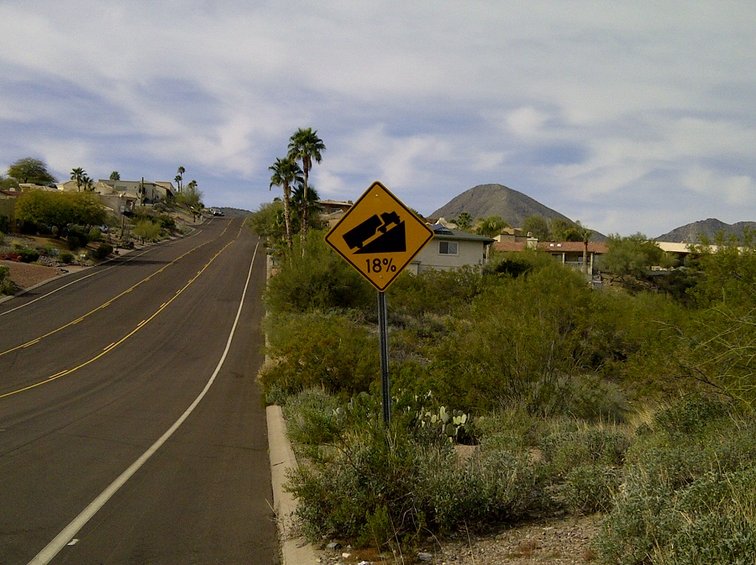
Extreme grade on the driveway shifting weight to the wheels on the downhill side. (This is the biggest factor. I suggest it's over 18%.)
New tires.
Over inflated new tires with only 2/3 of the tread touching/wearing.
High temps actually improve traction over cold tires.
Weight of the rear vs. front like pickups with a light rear end and heavy front.
My Dodge Cummins also slipped some in wet weather with new tires. It's a MT left in gear with the parking brake on.
Note if I loose inertia in reverse going up the drive way I have to go down and start again otherwise all it does is burn out. Yeah it's an extreme slope apparently beyond the design limits of vehicles.
So the solutions to the problem I have so far:
Park nose up always. (This works 100%)
Locking the front wheels that have traction. Parking brakes for front wheels are unheard of. FWD cars would have park locking the front wheels and risk jamming the park pawl.
4X4 locking the front wheels through the drive line and hope a drive shaft doesn't fall out or fail. (Big trucks do have a parking brake on the end of the transmission.)
Adding a new section of the driveway that curves and is flatter for parking.
Getting a 1992 project truck out of the garage so I can back in where it's flatter to unload.