
n8in8or
I never met a project I didn’t like
I finally have the cooling stack mock-up done.
My goals were to:
1. Seal the radiator to the core support.
2. Improve airflow through the cooling stack.
3. Flip the AC condenser and trans/engine oil cooler orientation in the stack.
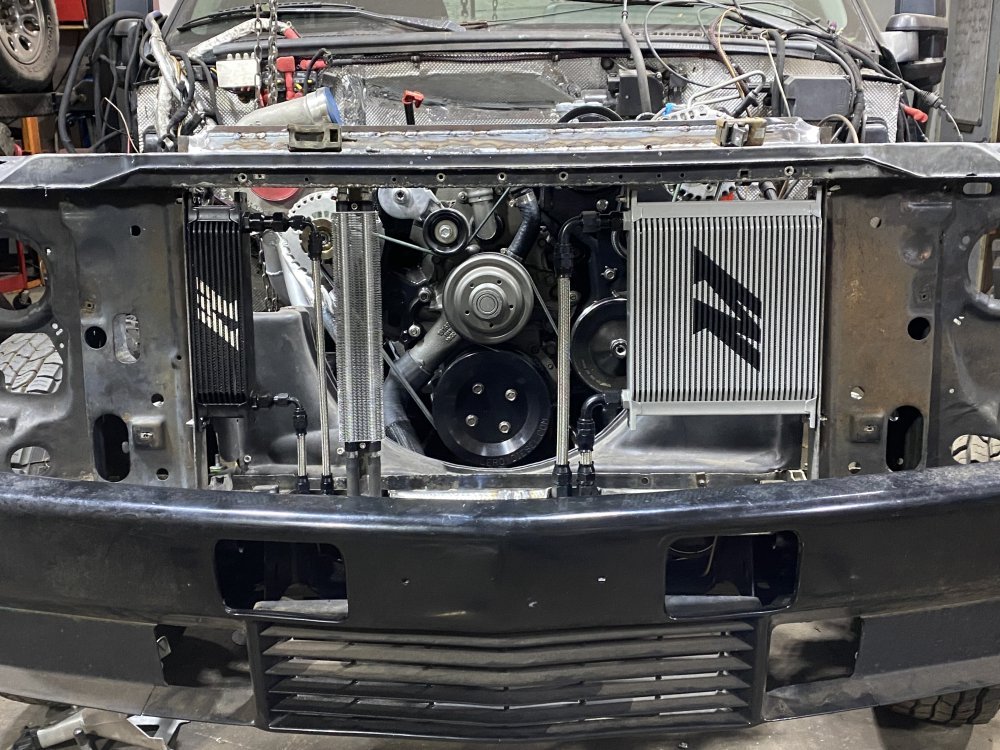
Point 3 is odd, but my thought here was that air conditioning is optional, but the oil coolers are not. My rationale is if it’s a hot day, but the fluids are running fine, the AC condenser is getting max cooling and the powertrain is also happy as well as me in the cool cab. But, if it’s a hot day and the powertrain is also running hot, I can turn off the AC and reduce heat that is being put into the cooling stack. Solid reasoning? Not sure, but I wanted to roll with it.
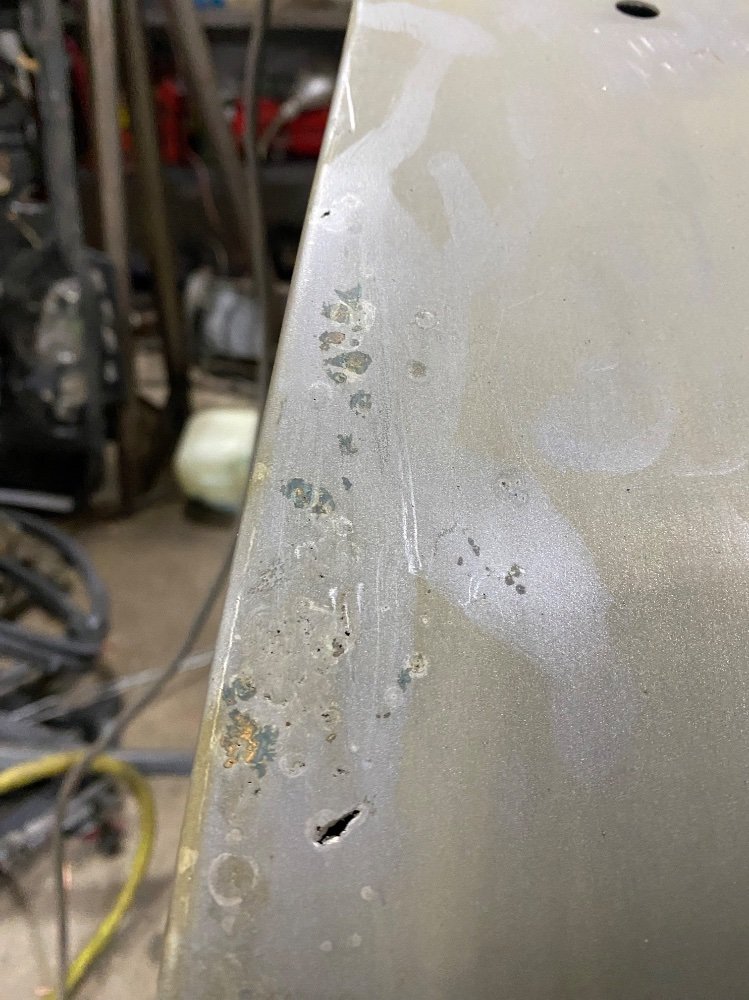
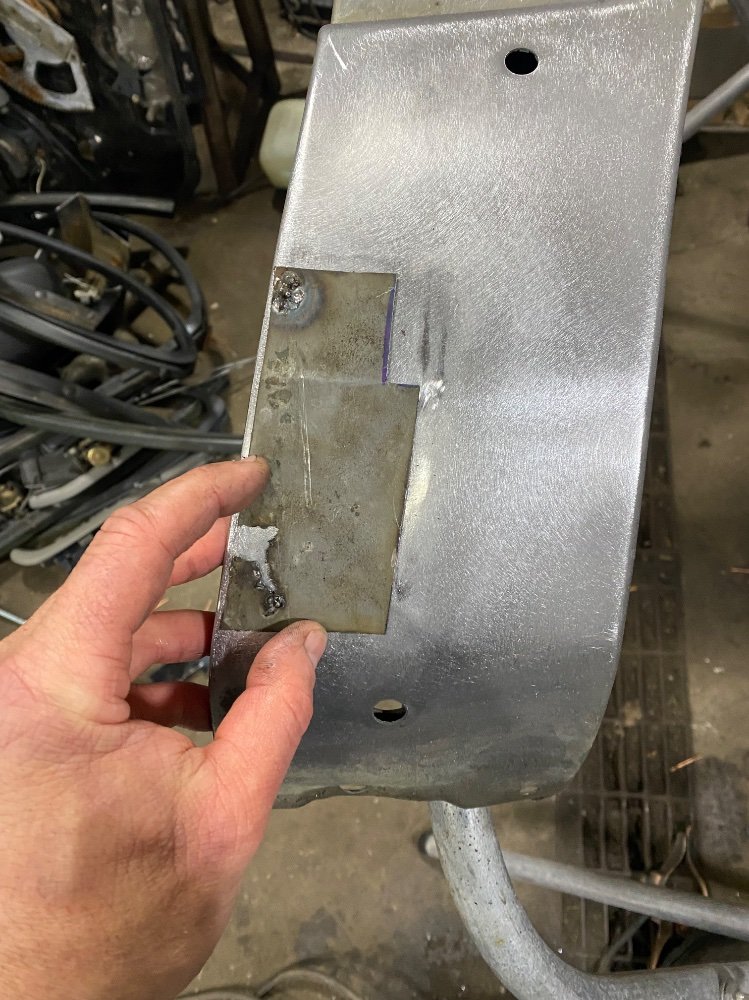
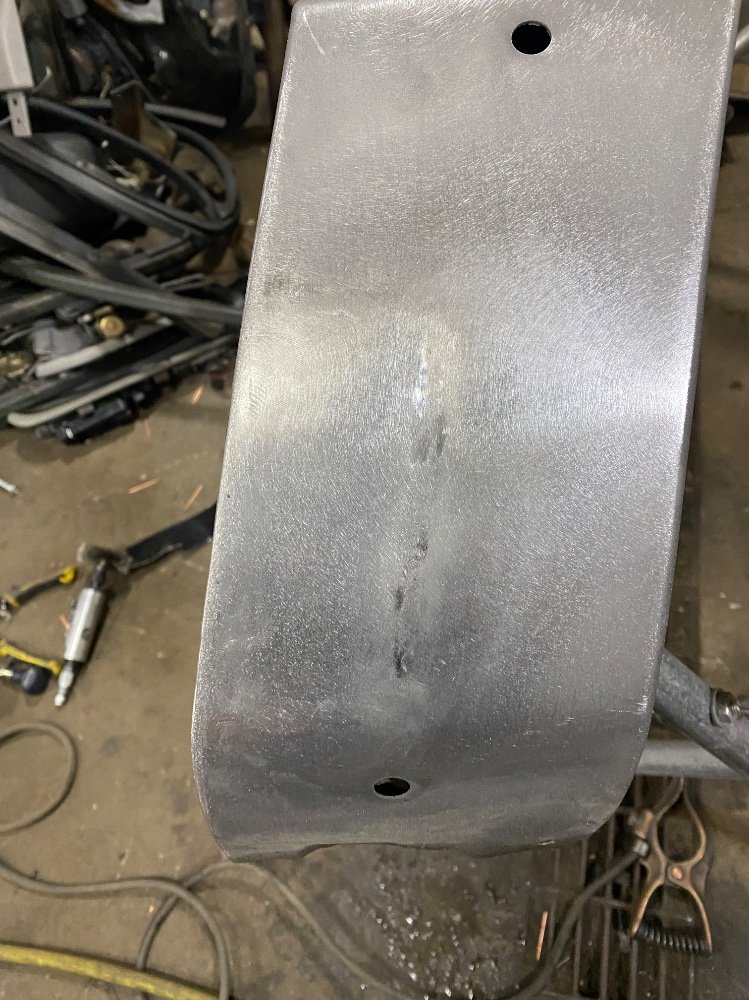
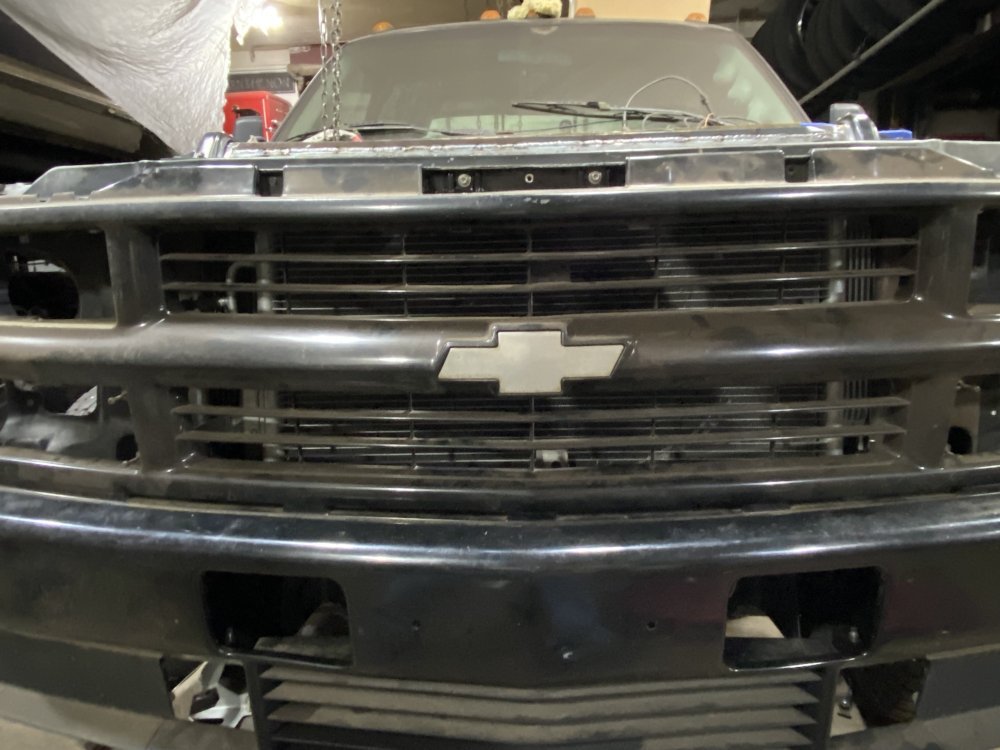
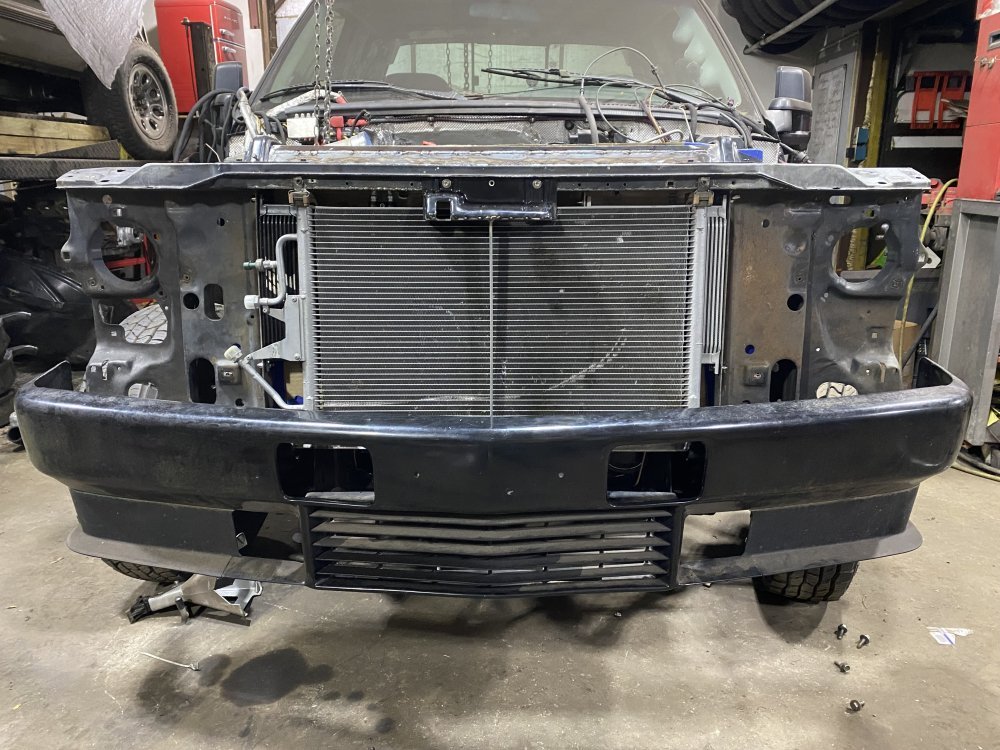
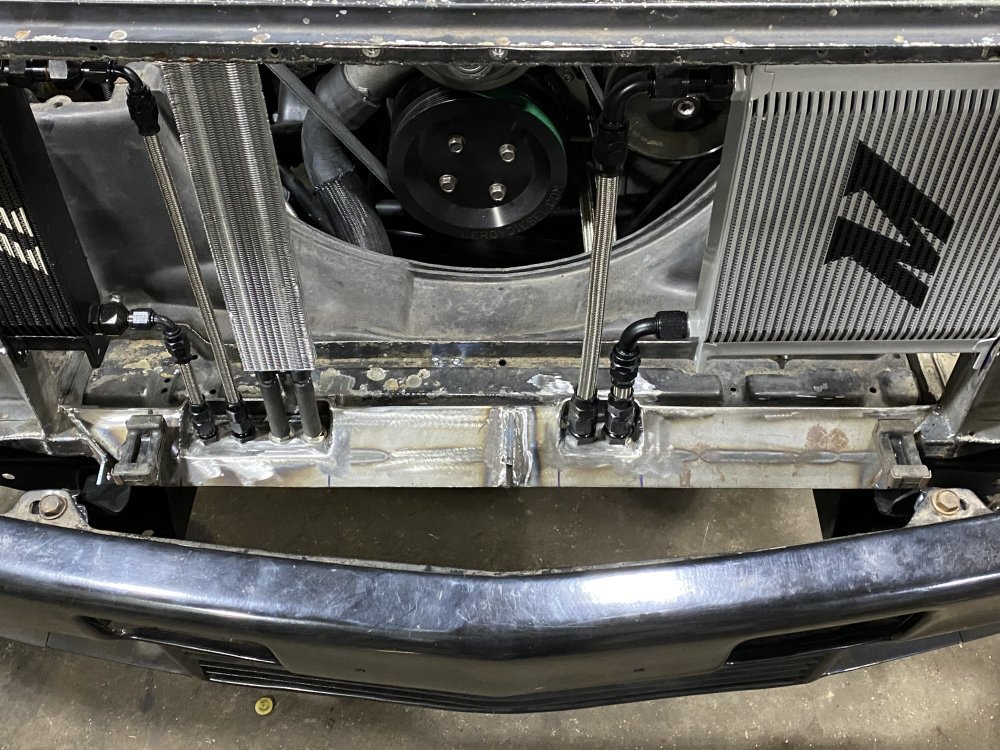
To execute goals 1 and 2, I cut out unnecessary metal so the radiator core wasn’t obscured at all and then added new metal for rigidity and to also help airflow into the core, as well as give a surface to seal the core support to the perimeter of the radiator core. I also modified the hood latch brace so it impeded airflow less.
It was hard to show details in pictures, but here are a couple.
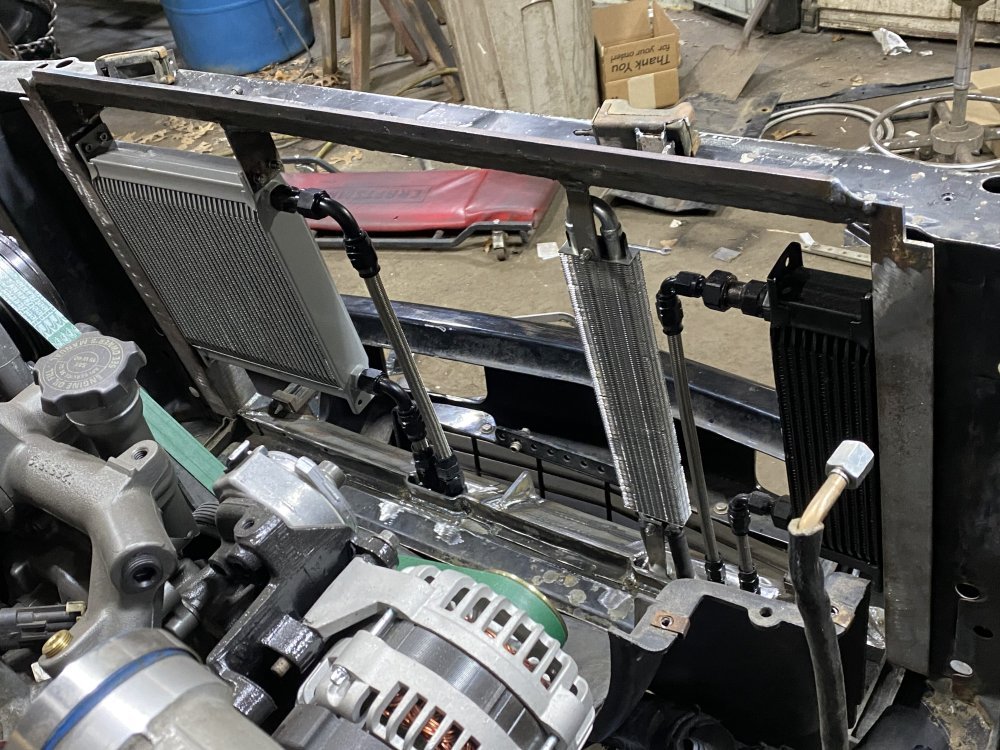
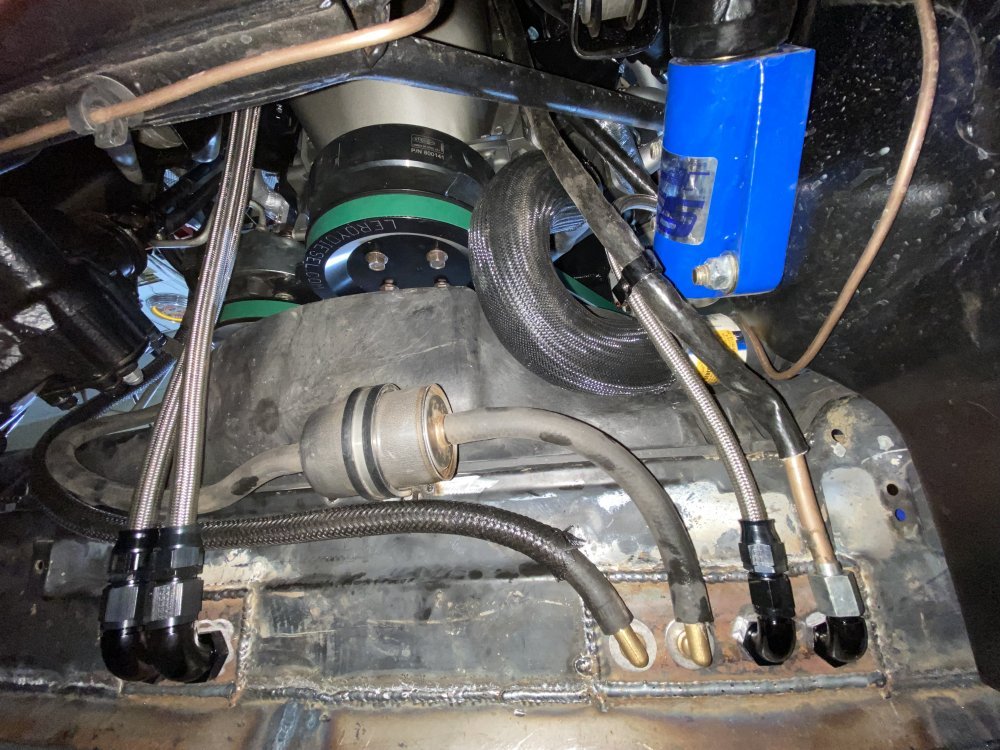
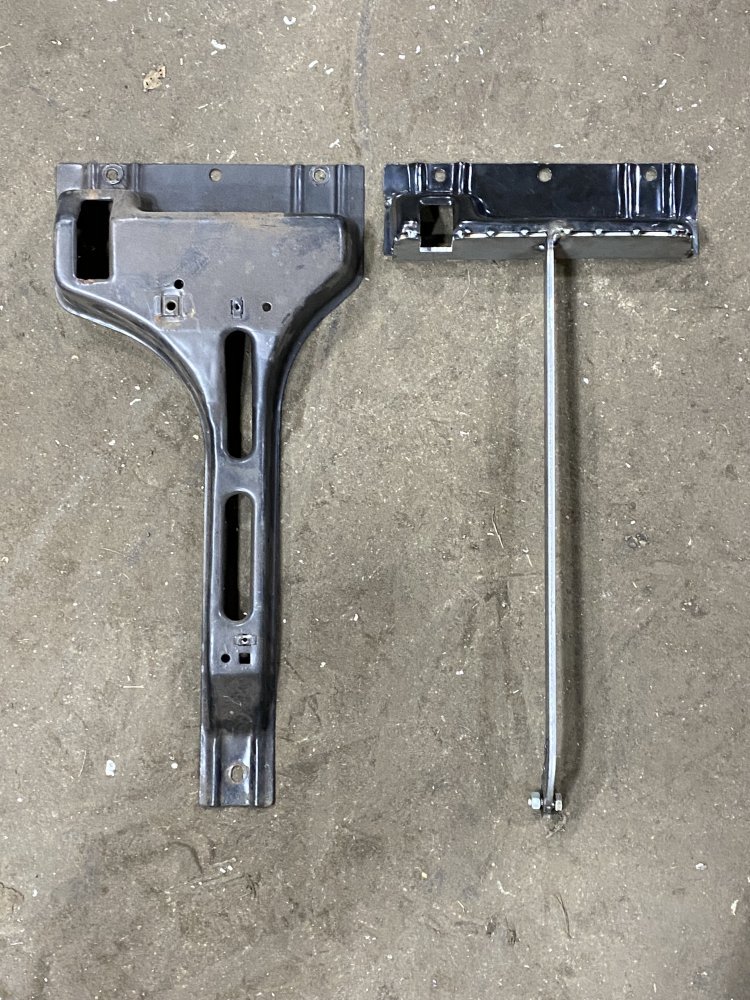
Since the pics weren’t turning out great, I also took some videos to explain my mods better and show how I did them. They ended up longer than I expected them to be. Part 1 is more of a macro video - what I’m doing and why and the overall picture. Part 2 had some parts removed so details can be better seen.
Part 1
Part 2
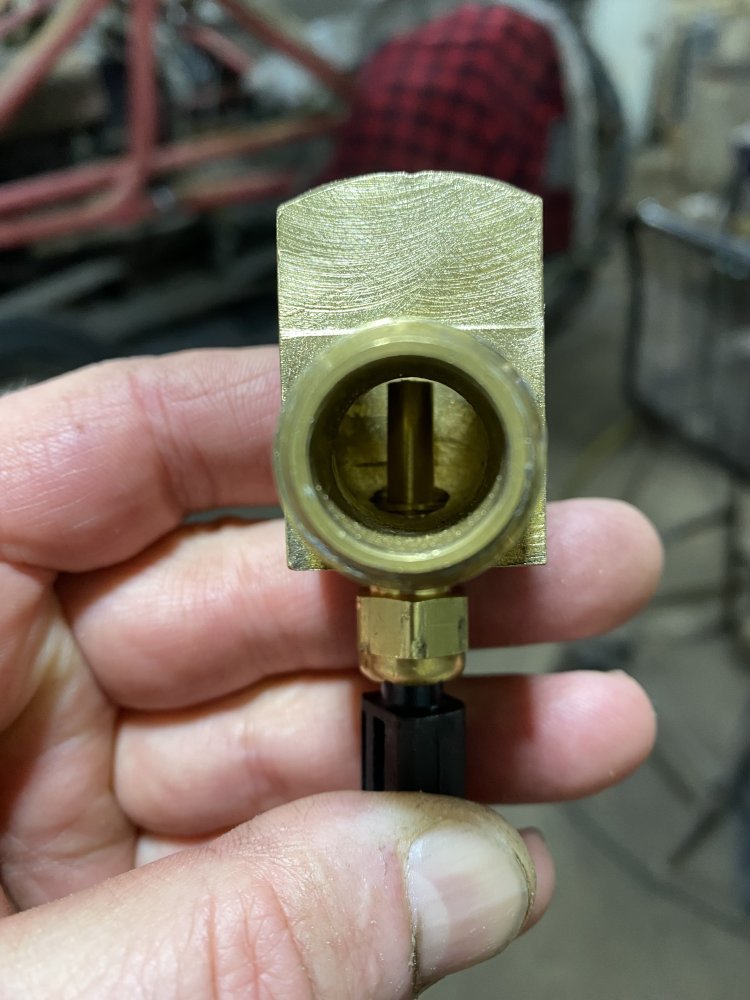
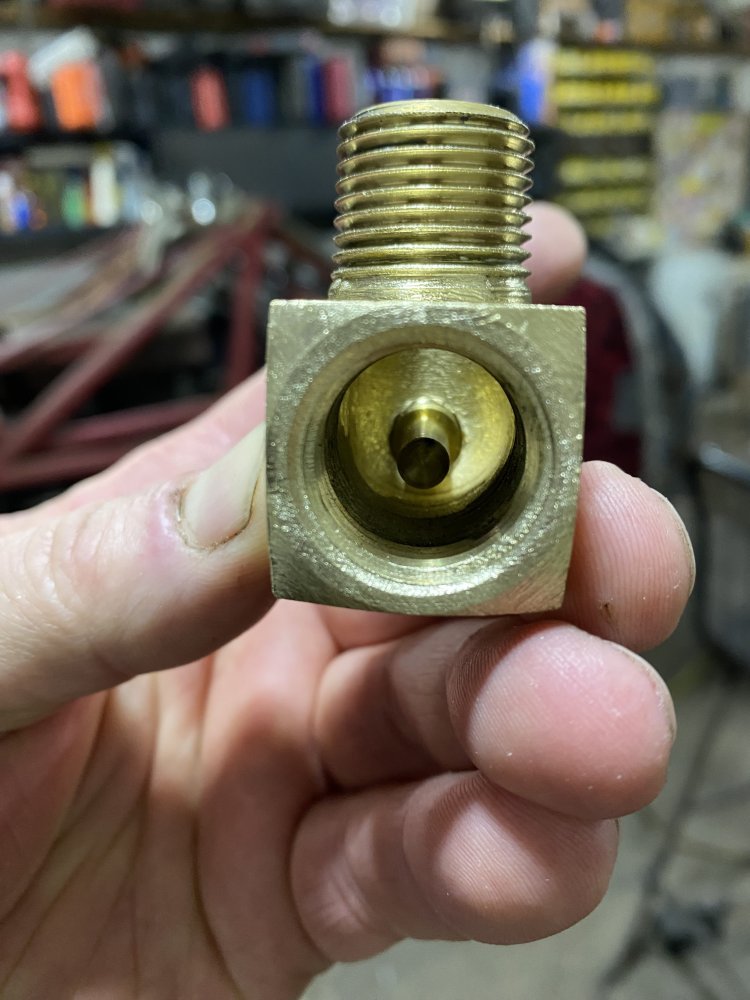
One last thing is I incorporated an engine oil temperature gauge sender into a 90 degree fitting where the oil cooler feed leaves the block. I looked at the oil circuit diagram and this was the best location for me to get an accurate reading since it always has oil flowing through it and it’s the first place that’s accessible after the oil pump, so the oil should be at its hottest. I wish I had the forethought to add a bung to the oil pan, but I didn’t, so this should be the next best thing. I also ported the fitting a little to make sure flow wasn’t impeded any.
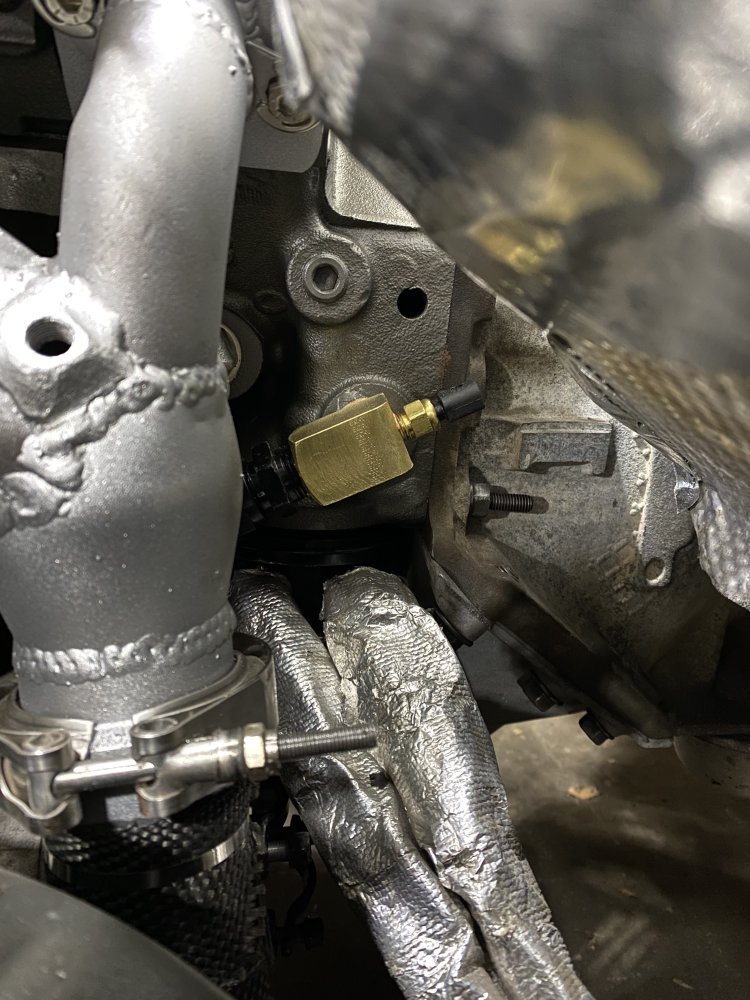
This whole venture may be overkill, and maybe won’t have any improvement over stock at all, but it was an idea in my head and figured I might as well act on it while I’m this far into the truck. I’m hoping that making it easier for air to enter, and the air to exit through the fender heat extractor vents helps to keep me always running cool.
My goals were to:
1. Seal the radiator to the core support.
2. Improve airflow through the cooling stack.
3. Flip the AC condenser and trans/engine oil cooler orientation in the stack.
Point 3 is odd, but my thought here was that air conditioning is optional, but the oil coolers are not. My rationale is if it’s a hot day, but the fluids are running fine, the AC condenser is getting max cooling and the powertrain is also happy as well as me in the cool cab. But, if it’s a hot day and the powertrain is also running hot, I can turn off the AC and reduce heat that is being put into the cooling stack. Solid reasoning? Not sure, but I wanted to roll with it.
To execute goals 1 and 2, I cut out unnecessary metal so the radiator core wasn’t obscured at all and then added new metal for rigidity and to also help airflow into the core, as well as give a surface to seal the core support to the perimeter of the radiator core. I also modified the hood latch brace so it impeded airflow less.
It was hard to show details in pictures, but here are a couple.
Since the pics weren’t turning out great, I also took some videos to explain my mods better and show how I did them. They ended up longer than I expected them to be. Part 1 is more of a macro video - what I’m doing and why and the overall picture. Part 2 had some parts removed so details can be better seen.
Part 1
Part 2
One last thing is I incorporated an engine oil temperature gauge sender into a 90 degree fitting where the oil cooler feed leaves the block. I looked at the oil circuit diagram and this was the best location for me to get an accurate reading since it always has oil flowing through it and it’s the first place that’s accessible after the oil pump, so the oil should be at its hottest. I wish I had the forethought to add a bung to the oil pan, but I didn’t, so this should be the next best thing. I also ported the fitting a little to make sure flow wasn’t impeded any.
This whole venture may be overkill, and maybe won’t have any improvement over stock at all, but it was an idea in my head and figured I might as well act on it while I’m this far into the truck. I’m hoping that making it easier for air to enter, and the air to exit through the fender heat extractor vents helps to keep me always running cool.