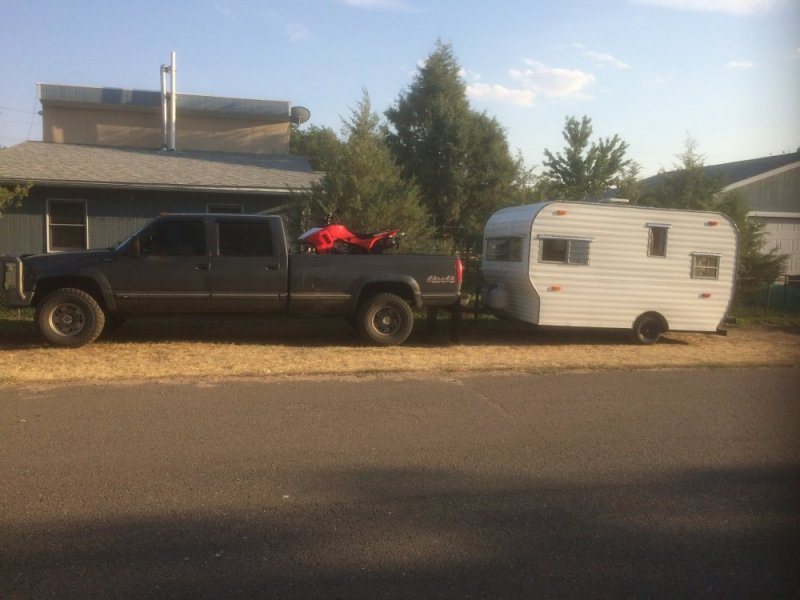
First off... 35' long
YUCK!!! That's driving a big rig aka
Work not fun. Sure you get 4' over the bed and 4' over the trailer loosing 8' of rig length. Look at it another way: most National Parks are good for 27-28' max trailer length. That's hitch to bumper. The Grand Canyon does allow 40' RV's, but, good luck getting a 40' spot. Much easier to get a 27' or smaller space esp. for a max 1 week length stay.
I have owned my 2003 27-5L Arctic Fox 3er for 4 years now. An older couple put around 100K on it and then couldn't lift the hitch in and out anymore. I have had the roof resealed and reconditioned, but, not replaced. The skylights are near EOL and need to be redone soon. I have had one slide bearing plate break on the main slide and needs repair, but, not a show stopper.
Delamination ... look it up. It's expensive to fix and makes a RV a Total Loss quick. A crack and delamanation less than 1' cost me $1,000 to fix. A fiberglass RV or tin can that avoids this is not available in 4 season 5th wheel configurations. There is a
fiberglass Escape trailer 5th wheel.
50 Amp vs. 30 Amp. Again you have more 30 Amp service at National Parks than 50 Amp. 50 Amp is for bigger units that take 2 AC units and a bigger genset. 50 Amp is two in phase 120V lines where 30 AMP is a single 120V line.
Brands in this length I would look at Arctic Fox. I have the older 27-5L (27') before they made it too damn long. I can't buy anything from them in the 28' or less length new today.
Tires... Used I suggest replacing the ST with LT tires at a tire shop near the seller of the RV. Michelin XPS RIB or LTX will age out before wear out. ST are a garbage rating and even the new Goodyear ST's have cried "Uncle" on my RV with tread cracking in the first year. 5 Years is a good life limit on RV tires.
After you get one make sure the converter is as close to the battery box as possible and have some good thick wires to it. DIY project. My 5th wheel managed to put the damn thing on the other end of the RV from the batteries and run it to the power center on the other side of the RV ... 36' of krap 6 awg wire on a 27' RV. Just couldn't make a longer run giving me a 1 volt drop when charging the batts off the generator. Moving the converter and using thick wire went from 25A to nearly the limit of the 60A converter into two 6V Lifeline AGM batteries.
Make room in the battery box for AGM 6V or go with newer lithium batteries. AGM's do not have a AMP limit when charging and will save fuel on the genset or make use of the limited genset run hours in parks.
The Main Propane Regulator. Get rid of the cheap Communist krap and put in a Made in USA Rego regulator. 10 Year warranty rather than watching the genset starve for fuel and burn stuff up every few years as the Commie reg fails again. A few places sell them online or special order from a local Rego Dealer. Mine is 4 years old and only had to be adjusted once.
http://www.regoproducts.com/lpg/lpg-nh3-products/products/7525b.html
Gen-turi for the generator exhaust is a good idea.
A NASTY design defect in ALL RV refrigerators is the lack of overheat protection. Combined with thinner tubes esp. used on some fridges prior to 2013 "off level" operation can cause long term damage until they leak or burst. Nasty fireballs result sometimes. Class Action lawsuits, of course, don't fix the damn problem... However a "Not Invented Here" solution exists to protect the fridge from overheat. (OEM's provide a meltdown cooling unit failed shut off and still have fires.)
Fridge Defend by ARP® controls the high temperatures that can lead to fridge failure and safety issues, our fan controller improves efficiency and repairs fan problems without removal of the fridge in most cases for Dometic, Norcold & Amish RV Refrigerators.

www.arprv.com
A fan in the refrigerator helps it work better. So does 1/2 LB of dry ice to get it started up quicker. I have one external cooling unit fan from ARP on my RV fridge as well.