BTW I thanks for the offer I have a trailer. What redneck down here doesn't have some kinda trailer.
True.......
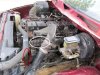
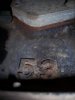
Should I stay away from this block? And if so I'm guessing that's part of the engine ID #s.
This IS NOT a "53" block. The 53's were used from late 98-01. The block in this truck should be good to go, at least as far as it isn't a 53, so no "factory casting problems" on this block.
The "53" comes from a casting number on the side of the block and is used to identify the problem blocks. Supposedly it affects about 100,000 blocks, but not only in Dodge Rams. The 53 block was also used in medium duty trucks from different manufacturers, mobile homes, public school buses and mass transportation buses.
Brazilian Blocks are cast by a company named "TUPY" and are marked such. They are identified with cast evolution numbers. #53's are TUPY's. #54 and later evolutions were improved to correct the block issues that the 53's had.
How Do I Find out?
If you want to see if your engine block could be one of these dreaded "53" blocks, crawl under the front, left side, and look up at the block on the front, directly under the injector pump (by the PS pump). You should see a large wiring harness mounted to the block. Directly below this, just above where the oil pan meets the block you will look for a "53" cast in the block. The numbers will be about 1 inch tall.
What Happens?
A crack develops on the right side of the engine, below the freeze plugs, right where the block bends back towards the inside of the block. It is a difficult area to see for auto transmission owners as it is directly behind the transmission heat exchanger. At first everything evaporates so there is no spot under the truck, but you may notice a coolant odor. The leak doesn't occur at idle in most cases because the crack is tight to get through, and doesn't leak until the RPMs of the engine are up, with the water pump causing higher pressure inside the engine block due to the restriction of the thermostat.