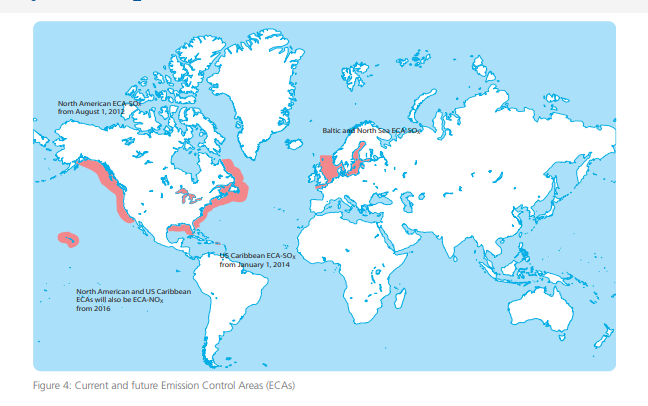
Like I mentioned earlier enforcement may be an issue.
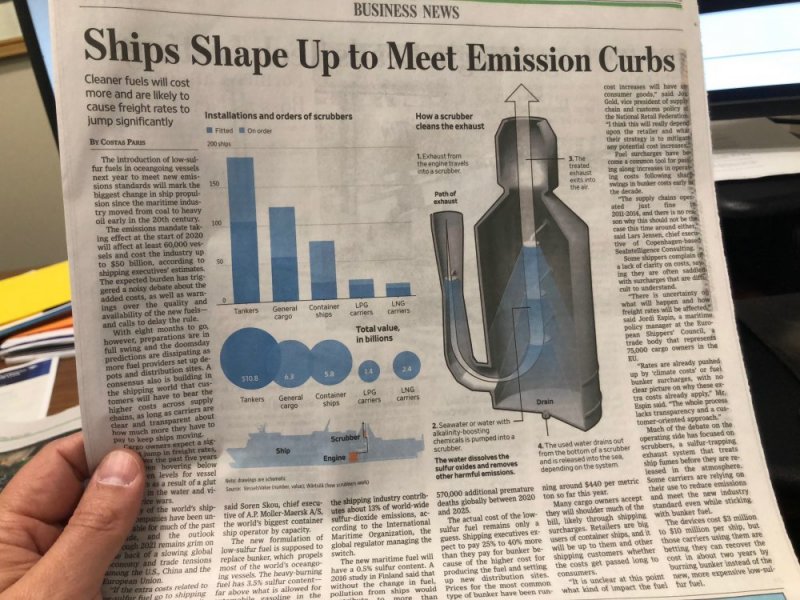
The article mentions insurance companies are going to be used to help enforce the law by not covering noncompliant ships. But again this probably is more Western-oriented vessels.
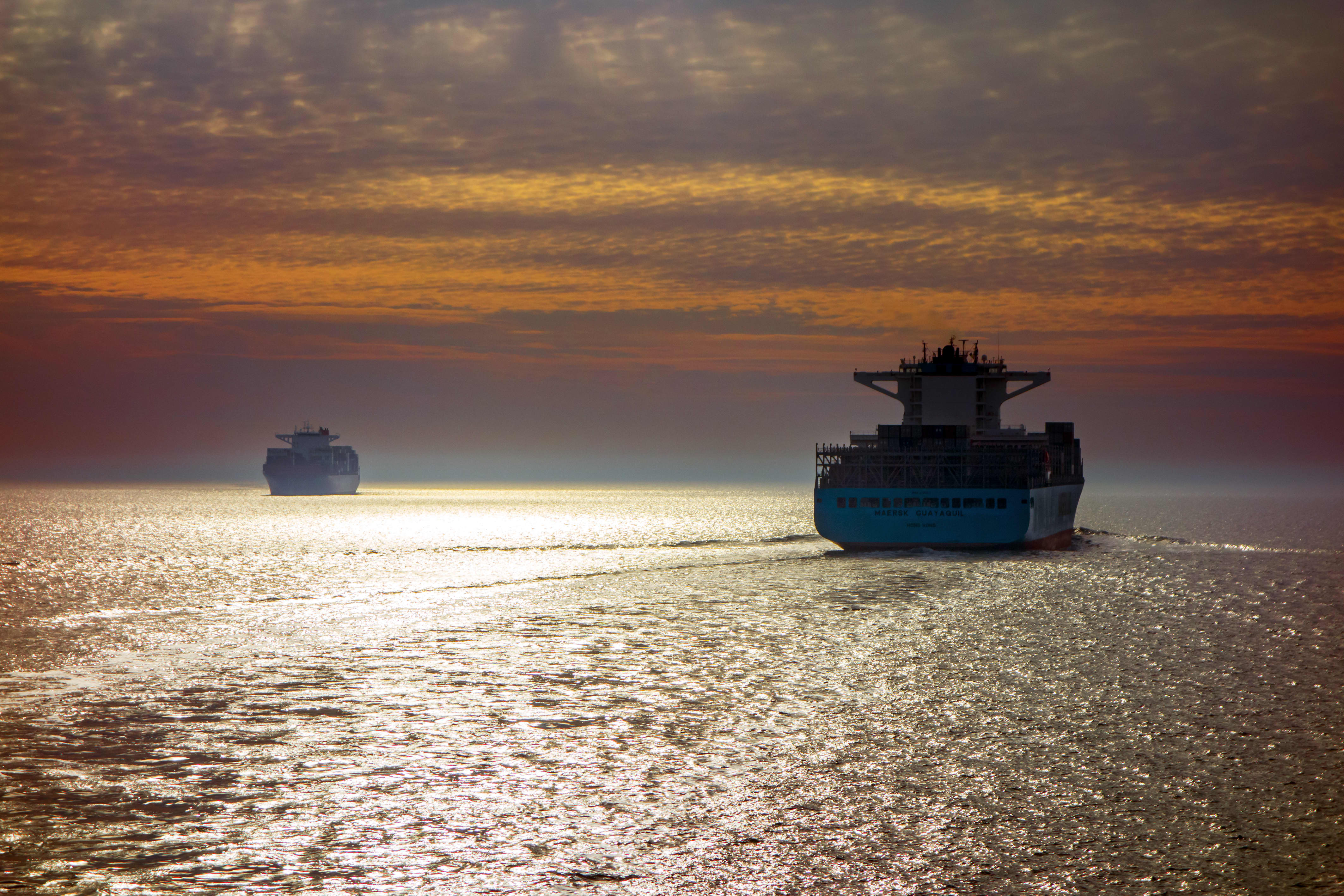
It does seem kind of penny wise and pound foolish to restrict individual vehicles emissions so tightly when large-scale ships can do so much more polluting. I assume this lopsidedness is due partially to the fact that over open ocean pollution can dissipate with less impact on human populations.
Will it lead to more foreign registry of ships and loophole chasing ???
From Wikipedia
Each merchant ship is required by
international law to be registered in a registry created by a country,
[3] and a ship is subject to the laws of that country, which are used also if the ship is involved in a case under
admiralty law. A ship's owners may elect to register a ship in a foreign country which enables it to avoid the regulations of the owners’ country which may, for example, have stricter safety standards. They may also select a jurisdiction to reduce operating costs, bypassing laws that protect the wages and working conditions of
mariners.
[4] The term "flag of convenience" has been used since the 1950s. A registry which does not have a
nationality or
residency requirement for ship registration is often described as an
open registry. Panama, for example, offers the advantages of easier registration (often online) and the ability to employ cheaper foreign labour. Furthermore the foreign owners pay no income taxes.