Some more items to carry are pieces of firewood and a couple shovels. Reasoning is that when stuck, shoveling some snow from in front of the drive tires can help (or in back if trying to back). Bonus is if it is safe enough to jack the truck, shove a piece of firewood under the spinning tire(s) for a little extra help with grip. By the way, if the snow is deep enough, might also need to dig out under the frame as snow under the truck will hold the truck in place no matter how much traction you get.
Carry some extra strong recovery straps as well. If you get stuck hard, might have to wait for another vehicle to pass by for some help with getting unstuck. Just make sure that the frame is not compacting snow and dig it out if it is.
For bed weight, there is another option of a water bag specifically designed for this purpose. Definitely would carry a bunch of sand and kitty litter for use as grip.
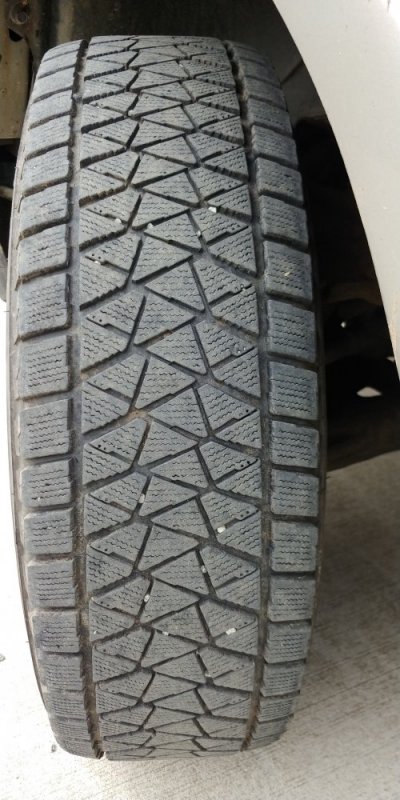
Along with sufficient weight on the rear and a LS differential (as already noted) another factor is tire pressure.
Sure, there are plenty of articles and emotional commentary about not messing with tire pressure, but my experience with this is that it will absolutely help with traction. Examples:
- Sports car with 50/50 weight distribution, rear drive LS, manual transmission, and highway all season radial tires (35 psi max variety). When it snowed a modest amount, I dropped psi to 20, put some kitty litter in the trunk, and carried as much fuel as possible (tank sat just in front of the axle). It was just me and the 4WD Jeeps out on the road. Did not venture out in depths past 6" as I did not want to push that car's limits.
- 8K# SOB 4WD diesel pickup, manual transmission, Load E highway radials, and a LS rear that did not always work:
> Scenario 1) 20" of snow. Let the weight of the snow in its bed act as a rear weight. Dropped psi to 20 and it plowed through. Had to stop and rock on occasion, but never got stuck.
> Scenario 2) Bottom of a muddy ravine with the 8' bed completely loaded with freshly split wood. Tires at their normal pressure spun as I tried to climb back up the hill (even in 4WD Low). Dropped to 50 psi and still spun. Dropped to 15 psi, rolled right out of the muck and back up the hill.
Regarding negative comments about dropping psi. I actually agree with the warnings of doing this as it is hard on the driveline and tires. So, when going this route, limit speed until taking the psi back up to a normal range as soon as possible.
To Stoney's point about experience with driving in snow, have a real world example of where the absolutely best vehicle will do nothing for an inexperienced and stubborn driver. In Scenario 1, I came across a fool in a Hummer equipped with a nice set of mudders whom volunteered to drive hospital employees to / from work. Despite a heavy vehicle, AWD, and good tires, that moron managed to get it stuck. Tires were completely aired-up and he was heavy on the throttle as if he was trying to do qualifying laps at a NASCAR race. Was funny to watch all tires spin as he flung snow everywhere and the Hummer just dug-in. I pulled him out once and offered suggestions on how to change driving habits and tire pressure. But, he was *way* too smart for me and continued to hit the throttle hard with fully aired tires after I got him free from where he dug-in. He eventually managed to get out of that community but I did not offer any more advice or help. The impressive show of four white rooster trails as the Hummer slid about was hilarious






 Car control and experience is king.