@treegum,
Actually not a bad concept at all, so mush so that Ford owns a very broad Patent on it!
If your ultimate goal is hp/compact/light weight, yes using the a/c system is very viable. But as others have pointed out, there's no free lunch. Even small automotive a/c refrigerant pumps consume >10HP. This translates to lower mpg.
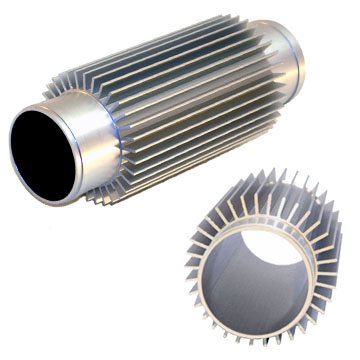
@JayTheCPA, what realy matters in a heat exchanger is the thermal impeadence of the device (conversely, thermal conductivity coefficient). The materials (aluminium, copper, brass, SS), and the surface area exposed to the media are the biggest factors. Tubes, coils, heatsink fins, phase change heat-tubes, forced air, refrigerants, peltiers, are all solutions to effectively condensed large suface areas into smaller packages. An in-tube "turbolator" does to a lesser degree accomplish the same (at least on one thermal junction interface).
Trust me boiler/water tank mfg's wouldn't utilize them if they were just dead weight.
Will L's hmmwv application is atypical, as his driveline is substantially more complicated and capable than most civi vehicles. Unfortunately the weight and driveline losses of a hmmwv results in fuel economy that make my 6.5 K2500 suburban seem like a prius.
His application, if designed out of the hmmwv cooling stack would work quite well and probably have negligible fuel economy impact. Please keep in mind up-armored mil hmmwv weigh in the 16,000-20,000Lbs range now. Moving that weight 50mph through sand, a refrigerant based charge cooler's pwr consumption would be like a flee on a horse.
BTW, speaking of prius's, since the advent of commercially viable electric cars: dc powered electric a/c compressors are readily available now! Mmmm, bet some of you are intrigued in the possibilities of that!