Here's the vin decoder thanks to bobbie martin http://www.compnine.com/vid.php The one thing to watch out for is to be shure to enter the zeros as zeros not o'scan you do a 93 i used the vin check area once on mine and all it got me was dealer info and maint i was hopeing for more

Navigation
Install the app
How to install the app on iOS
Follow along with the video below to see how to install our site as a web app on your home screen.
Note: This feature may not be available in some browsers.
More options
-
Welcome to The Truck Stop! We see you haven't REGISTERED yet.
Your truck knowledge is missing!
- Registration is FREE , all we need is your birthday and email. (We don't share ANY data with ANYONE)
- We have tons of knowledge here for your diesel truck!
- Post your own topics and reply to existing threads to help others out!
- NO ADS! The site is fully functional and ad free!
Problems registering? Click here to contact us!
Already registered, but need a PASSWORD RESET? CLICK HERE TO RESET YOUR PASSWORD!
You are using an out of date browser. It may not display this or other websites correctly.
You should upgrade or use an alternative browser.
You should upgrade or use an alternative browser.
possible new block
- Thread starter chevyCowboy
- Start date
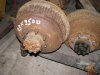
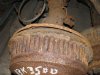
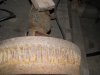
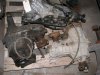
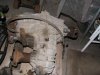
Here's the pics of the 2 axles and 2 transfer cases. The axle on the left is the 93 3500. The one on the right is from a 97 2500HD. I swapped all the brake parts off the 97 axle on to my 92 k2500HD axle.
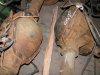
The transfer case on the bottom is a new process 241. The transfer case on right is the borg-warner. Not shure of the model number,tag is gone. The picture doesn't really show the size difference that much. I can easily lift the new process over my head. No way with the borg-warner.
The transfer case on the bottom is a new process 241. The transfer case on right is the borg-warner. Not shure of the model number,tag is gone. The picture doesn't really show the size difference that much. I can easily lift the new process over my head. No way with the borg-warner.
Attachments

Anubis
Being fat sucks
oh no .... I could see the difference in beef ........ the right one has alot more beef.....

chevyCowboy
I might be crazy but i ain't dumb
found some old info i had from when i talked to this guy back in sept it has a 4l80 there was a gm crate motor droped in btwn 47-48k by the PO before this guy bought it. it is possible that this block is a squirter block. what are the advantages/disadvantages to these blocks? althought im guessing that the crate motors are remains so it could be a 599  id like to find one
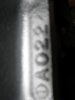
id like to find oneThe 96 "506" blocks are the ones to shy away from. You almost have to have it out of the truck to read the julian date cast into the passenger side bellhousing top face. The letter = month[jan=1,feb=2] then is the date [01 =first o2=second] Then the year [1=91, 2=92]
Attachments


SmithvilleD
Active Member
The advantage of the squirters is better control/limiting of peak piston temps under high loads. Many, perhaps most turbo diesels designed to pull at higher % loads continuously have them.
The disadvantage is there seem to be more reports of them cracking, sometimes up into the cylinders. Can't recall if the theory was the cracks start around the additional oil passage drillings, or if the cracks starting from marks/dings possibly caused by whatever machinery was used to drill the additional holes - like a spinning cutter wheel occasionally bumped up against the bottom of a cylinder & dinged it creating a stress riser.
Gotta open it up to check for cracks around the mains anyway. Having 45-50k miles on the engine can possibly be a good thing, in that the block has been thru lots of heating/cooling cycles and is "seasoned". Not that the additional time necessarily makes it stronger/more durable, but engine builders consider them more "stable". The thinking being all the heat cycles have allowed some internal stresses (created when pouring it) ample opportunity to relax.
My thought is more heat cycles/running time means more opportunity for a block that's prone to cracking, to show itself cracked. It's just a theory, but after finding no cracks around the mains in my truck's 157k mile engine, one would hope it's unlikely to ever crack under normal conditions.
The disadvantage is there seem to be more reports of them cracking, sometimes up into the cylinders. Can't recall if the theory was the cracks start around the additional oil passage drillings, or if the cracks starting from marks/dings possibly caused by whatever machinery was used to drill the additional holes - like a spinning cutter wheel occasionally bumped up against the bottom of a cylinder & dinged it creating a stress riser.
Gotta open it up to check for cracks around the mains anyway. Having 45-50k miles on the engine can possibly be a good thing, in that the block has been thru lots of heating/cooling cycles and is "seasoned". Not that the additional time necessarily makes it stronger/more durable, but engine builders consider them more "stable". The thinking being all the heat cycles have allowed some internal stresses (created when pouring it) ample opportunity to relax.
My thought is more heat cycles/running time means more opportunity for a block that's prone to cracking, to show itself cracked. It's just a theory, but after finding no cracks around the mains in my truck's 157k mile engine, one would hope it's unlikely to ever crack under normal conditions.
chevyCowboy
I might be crazy but i ain't dumb
The advantage of the squirters is better control/limiting of peak piston temps under high loads. Many, perhaps most turbo diesels designed to pull at higher % loads continuously have them.
The disadvantage is there seem to be more reports of them cracking, sometimes up into the cylinders. Can't recall if the theory was the cracks start around the additional oil passage drillings, or if the cracks starting from marks/dings possibly caused by whatever machinery was used to drill the additional holes - like a spinning cutter wheel occasionally bumped up against the bottom of a cylinder & dinged it creating a stress riser.
Gotta open it up to check for cracks around the mains anyway. Having 45-50k miles on the engine can possibly be a good thing, in that the block has been thru lots of heating/cooling cycles and is "seasoned". Not that the additional time necessarily makes it stronger/more durable, but engine builders consider them more "stable". The thinking being all the heat cycles have allowed some internal stresses (created when pouring it) ample opportunity to relax.
My thought is more heat cycles/running time means more opportunity for a block that's prone to cracking, to show itself cracked. It's just a theory, but after finding no cracks around the mains in my truck's 157k mile engine, one would hope it's unlikely to ever crack under normal conditions.
just talked to a guy locally and he has been trying to get ahold of the guy in exira for 2months and he has not yet returned his emails either. so that is kindof a downer maybe your friend over that way can track the guy down??
on the bright side i got ahold of the mechinest i want to use and am going to take the block for him to look at he is thinking he may be able to do something to fix it from what i told him over the phone

North Maine
Merchant Mariner
I was going to mention that I thought that truck was discussed on here months ago...
chevyCowboy
I might be crazy but i ain't dumb
I was going to mention that I thought that truck was discussed on here months ago...
it was i started it and seem to have forgoten about it till today
chevyCowboy
I might be crazy but i ain't dumb
The 96 "506" blocks are the ones to shy away from. You almost have to have it out of the truck to read the julian date cast into the passenger side bellhousing top face. The letter = month[jan=1,feb=2] then is the date [01 =first o2=second] Then the year [1=91, 2=92]
so what you are saying is not all 506 block are the ones to stay away from just the ones from 96?? i may have found a really good deal on a 506 block that broke the crank and comes with 18:1 mahle pistons
Broken cranks usually mean broken block. The 96 "506" blocks had a very high failure rate because the squirter holes weakened the block. The size of the squirter holes was reduced by 97. A safe bet is mid 97 or newer for a "506" block. Did you get the vin decoder to work?
chevyCowboy
I might be crazy but i ain't dumb
ok so i found a new possibility that sounds like it may be pretty good.
called a local auto salvage company and they have a COMPLETE running 93 6.5 599 block for $1550 it has 185K mi. this is for motor with heads, ip, manifolds, turbo, intake, water pump. everything other that alt, starter, ac comp, and ps pump.
this would be a direct dropin. to get the truck up and running(myspare gasser is starting to give up the ghost and i really miss my 6.5:sad they can have it to me by wendsday!
or
i have located a possibly good 599 block that i could use as a base to rebuild mine.
i figured it all up and to do it the way i want im looking at btwn $2500-3000
thats with scat crank, fluiddampner, used 18:1 mahle pistons from a guy i know, new inj and new clearwater heads, also will be having my ip rebuilt
or s
called a local auto salvage company and they have a COMPLETE running 93 6.5 599 block for $1550 it has 185K mi. this is for motor with heads, ip, manifolds, turbo, intake, water pump. everything other that alt, starter, ac comp, and ps pump.
this would be a direct dropin. to get the truck up and running(myspare gasser is starting to give up the ghost and i really miss my 6.5:sad
they can have it to me by wendsday! or
i have located a possibly good 599 block that i could use as a base to rebuild mine.
i figured it all up and to do it the way i want im looking at btwn $2500-3000
thats with scat crank, fluiddampner, used 18:1 mahle pistons from a guy i know, new inj and new clearwater heads, also will be having my ip rebuilt
or s
chevyCowboy
I might be crazy but i ain't dumb
Broken cranks usually mean broken block. The 96 "506" blocks had a very high failure rate because the squirter holes weakened the block. The size of the squirter holes was reduced by 97. A safe bet is mid 97 or newer for a "506" block. Did you get the vin decoder to work?
havent tried it yet
That's a fairly cheap price from a junkyard. Around here They get $2500 or more. If you can find one. Did you hear it run? Do they do compression tests? Something else to keep in mind is:with that many miles it should need a timing chain,water pump, frost plug heater,harmonic balancer and injectors. You could end up with $2000 in it.
Personally ,I'd keep looking. I would look for a 91-93 van suburban or bus with a 6.2. They are 599 blocks also. I got a 93 "599" 6.2 out of a short bus with less than 100k on it for $300 from a small junkyard. But if your current ride is dieing, that kinda changes things.Walking sucks.
Personally ,I'd keep looking. I would look for a 91-93 van suburban or bus with a 6.2. They are 599 blocks also. I got a 93 "599" 6.2 out of a short bus with less than 100k on it for $300 from a small junkyard. But if your current ride is dieing, that kinda changes things.Walking sucks.
chevyCowboy
I might be crazy but i ain't dumb
That's a fairly cheap price from a junkyard. Around here They get $2500 or more. If you can find one. Did you hear it run? Do they do compression tests? Something else to keep in mind is:with that many miles it should need a timing chain,water pump, frost plug heater,harmonic balancer and injectors. You could end up with $2000 in it.
Personally ,I'd keep looking. I would look for a 91-93 van suburban or bus with a 6.2. They are 599 blocks also. I got a 93 "599" 6.2 out of a short bus with less than 100k on it for $300 from a small junkyard. But if your current ride is dieing, that kinda changes things.Walking sucks.
no i didnt hear it run its in missouri. i may call an see if they can do a comp check but i kind of doubt they will. you are right and thats what im worried about i was thinking about building another motor to drop in when that one fails but im not sure i can afford that. well i can but it will deplete my savings and im trieing to buy a house in the summer. guess i could get a small loan! if i got this running engine i would most likely put new inj in and glows for sure probley do the timing set also. could put my water pump and the blancer i put in last year on this motor as well.
Anubis
Being fat sucks
get a military take out 6.2..... I see them all the time on Ebay for $800

i thought 1 tons had borg warner transfer cases
FWIW, my 94 on my old 96 K3500 both had borg warners :smile5:

Crankme69
New Member
If you are gonna end up spending more then $2K or better to repair yours...I would look at what that money plus maybe a $1K would buy you, like possibly a complete truck that then you could possibly utilize some of the parts off your 6.5 on...
FYI the 95 in my signature I paid $3300 for in Oct. this year.
Just throwing out another option for you too consider.
Edit addition:
Kinda like this 93 dually that I posted here the other day for $3200 that prolly ended up getting sold for $3K, by the way the add has been pulled already from craigslist, most of the good deals don't last very long...
http://www.thetruckstop.us/forum/showthread.php?t=19016
FYI the 95 in my signature I paid $3300 for in Oct. this year.
Just throwing out another option for you too consider.
Edit addition:
Kinda like this 93 dually that I posted here the other day for $3200 that prolly ended up getting sold for $3K, by the way the add has been pulled already from craigslist, most of the good deals don't last very long...
http://www.thetruckstop.us/forum/showthread.php?t=19016

buddy
Active Member
If you are gonna end up spending more then $2K or better to repair yours...I would look at what that money plus maybe a $1K would buy you, like possibly a complete truck that then you could possibly utilize some of the parts off your 6.5 on...
Very true, but then you buy their problems too. Its sounds so nice having a newly rebiult engine. Although if shopping for used pulled engine not any better than buying running truck.
chevyCowboy
I might be crazy but i ain't dumb
The 96 "506" blocks are the ones to shy away from. You almost have to have it out of the truck to read the julian date cast into the passenger side bellhousing top face. The letter = month[jan=1,feb=2] then is the date [01 =first o2=second] Then the year [1=91, 2=92]
ok so what dose f1511 mean
h212 would mean feb 1 1992