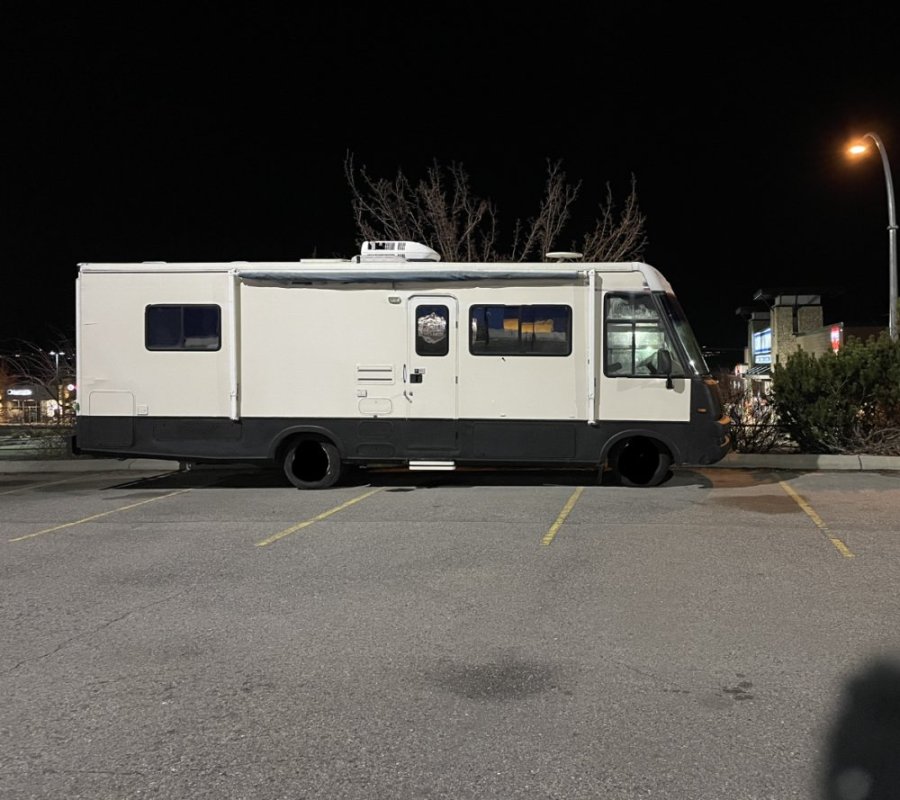
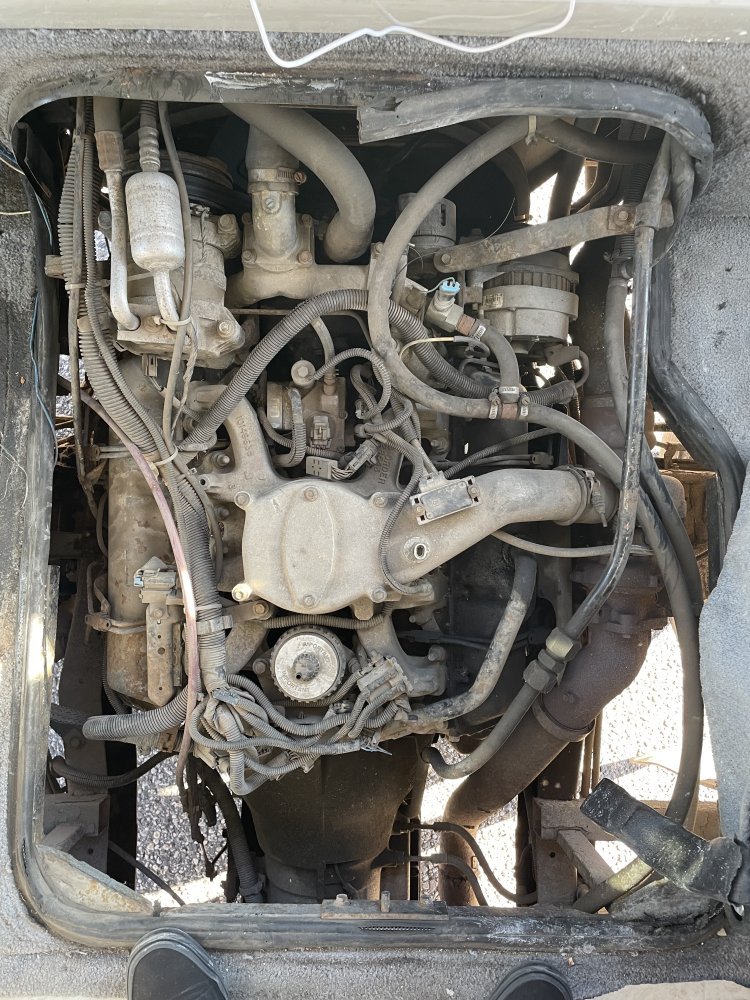
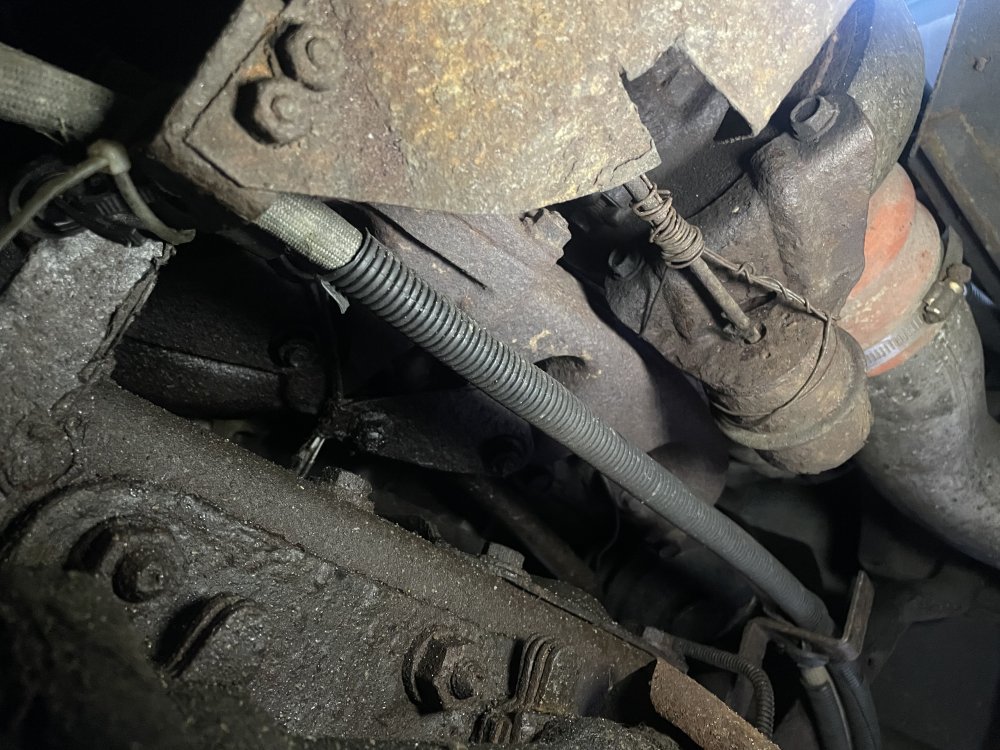
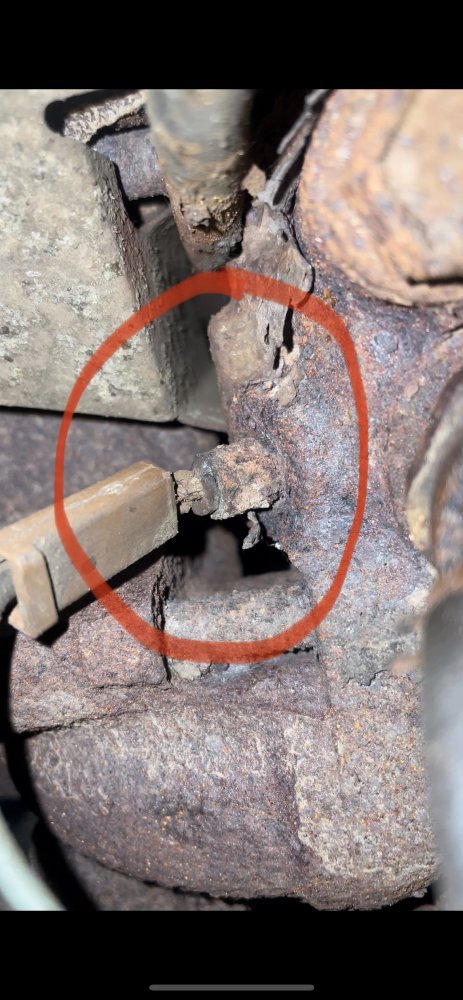
Bought the above described RV. Friend of mine told me to join this forum. A lot of mechanics decline working on these and I’m looking to learn to work on it myself. Shuts off while idling every few minutes. But after buggin for an hour it can take me across the country. My next move is to replace the glow plugs, never done that, they’re rusty, and my turbo waste gate is stuck open. I’m patiently working on it to get it starting normally for good. Gonna look around seek help and ask questions. The photos are a glow plug and a waste gate tied open by the previous owner.

Navigation
Install the app
How to install the app on iOS
Follow along with the video below to see how to install our site as a web app on your home screen.
Note: This feature may not be available in some browsers.
More options
-
Welcome to The Truck Stop! We see you haven't REGISTERED yet.
Your truck knowledge is missing!
- Registration is FREE , all we need is your birthday and email. (We don't share ANY data with ANYONE)
- We have tons of knowledge here for your diesel truck!
- Post your own topics and reply to existing threads to help others out!
- NO ADS! The site is fully functional and ad free!
Problems registering? Click here to contact us!
Already registered, but need a PASSWORD RESET? CLICK HERE TO RESET YOUR PASSWORD!
You are using an out of date browser. It may not display this or other websites correctly.
You should upgrade or use an alternative browser.
You should upgrade or use an alternative browser.
P30 Chevy Chassis 6.5 Turbo Diesel - 1996 RV - Itasca Winnebago
- Thread starter Vlad_p01
- Start date

Welcome
Might give it a good pressure washing to clean it up then start spraying penetrating lube on glows and the w/g arm. Expect to find the turbo needs a rebuild. Get a removal tool for the glows, your gonna need one, look into a better glow plug harness also.
Might give it a good pressure washing to clean it up then start spraying penetrating lube on glows and the w/g arm. Expect to find the turbo needs a rebuild. Get a removal tool for the glows, your gonna need one, look into a better glow plug harness also.
jrsavoie
Recruit
What should be done to check the turbo?
Side to side play?
In and out play?
Side to side play?
In and out play?

MrMarty51
Well-Known Member
Good to see You made it over to the forum Vlad.
Welcome.
I’m not real professional on these engines so I read the stickies about these engines, on the forum front page, and, do some searching in the forum along with following the advice of what the more experienced members post.
I was a little familiar with the 6.5 platform from being around them in my previous career but most everything I now know about them has come from the members in this forum.
Again, Welcome
Welcome.
I’m not real professional on these engines so I read the stickies about these engines, on the forum front page, and, do some searching in the forum along with following the advice of what the more experienced members post.
I was a little familiar with the 6.5 platform from being around them in my previous career but most everything I now know about them has come from the members in this forum.
Again, Welcome
Thanks Marty!
Thanks, Marty!Good to see You made it over to the forum Vlad.
Welcome.
I’m not real professional on these engines so I read the stickies about these engines, on the forum front page, and, do some searching in the forum along with following the advice of what the more experienced members post.
I was a little familiar with the 6.5 platform from being around them in my previous career but most everything I now know about them has come from the members in this forum.
Again, Welcome

dbrannon79
I'm getting there!
Welcome @Vlad_p01 That is a nice looking RV you have there. PB Blaster or some other penetrate oil and heat will be your best friend along with lots of patience for the glows. looks like lots of rust on them, the heads might be far too gone for a normal socket to get a bite. as Chris said, get you a puller too.
worst case scenario will be pulling the heads for a machine shop to remove them and any other broken bolts on the manifolds during the process.
worst case scenario will be pulling the heads for a machine shop to remove them and any other broken bolts on the manifolds during the process.

Will L.
Well-Known Member
Welcome.
As mentioned, pressure wash and wd40 the glow plugs, plan on heat.
It might be the death of the head- rust wins sometimes and that doesn’t look friendly to me. Unscrew them and if it slides out just like removing a spark plug, great. If you unscrew it and it won’t slide out, stop. Screw it back in and order the glow plug remover tool from Leroy.
Don’t put a penny into the gm turbo. A bigger turbo like an hx40 will pay for itself in the fuel savings. It helps some on pickups but a lot in an rv. It’s easier on the engine and as a bonus it will accelerate a little better.
A tune to match the turbo helps as well since you have a ds4.
I see the pmd still on the ds4, do you have a spare mounted on a heat sink somewhere?
If not, time to learn about that.
Check out the harmonic balancer and oil cooler lines asap- both engine killers.
Keep the temp at 200. At 210 watch the gauge more than the road. At220 pull it ver and let it idle back down to normal.
As mentioned, pressure wash and wd40 the glow plugs, plan on heat.
It might be the death of the head- rust wins sometimes and that doesn’t look friendly to me. Unscrew them and if it slides out just like removing a spark plug, great. If you unscrew it and it won’t slide out, stop. Screw it back in and order the glow plug remover tool from Leroy.
Don’t put a penny into the gm turbo. A bigger turbo like an hx40 will pay for itself in the fuel savings. It helps some on pickups but a lot in an rv. It’s easier on the engine and as a bonus it will accelerate a little better.
A tune to match the turbo helps as well since you have a ds4.
I see the pmd still on the ds4, do you have a spare mounted on a heat sink somewhere?
If not, time to learn about that.
Check out the harmonic balancer and oil cooler lines asap- both engine killers.
Keep the temp at 200. At 210 watch the gauge more than the road. At220 pull it ver and let it idle back down to normal.
JayTheCPA
Well-Known Member
If not already present, gauges for fuel pressure and exhaust gas temperature (EGT) are your friends. Adding a boost gauge is also helpful.
With no real known history on the transmission, consider dropping some money here as well. If the tranny is 4L80E or 4L85E as designed by GM, it is arguably a weak link. Will do Ok for pushing, but not so great for slowing the load. Have not looked into alternatives recently, but there were outfits that did a good job at hardening the unit so that it can handle torque converter (TCC) lock-up for deceleration. If the budget allows, might want to look into a 6 speed transmission, but this will add some complexity.
Depending on who wrote the computer's logic (GM or Winnebago), it might need some adjustment as well. In the pickup truck platform, OE code wants to unlock the TCC under a lot of scenarios where the more seasoned driver wants it to remain locked to limit brake use. With a hardened tranny and code that keeps the TCC locked more than unlocked, speed control gets better.
Switching to a higher stall torque converter is known to help with both power and fuel economy as it allows the engine to more quickly jump above its lugging range and into its desirable sweet spot. Sweet spot will depend somewhat on the turbo.
Another thought on the OE code is that chances are good that it is not all that great at downshifting. Specifically, when climbing a grade with speed dropping, it will likely wait too long before commanding a downshift which lugs the engine, and leads to high exhaust temperatures along with diminished ability to shed heat. So when the time comes to adjust for better TCC lock-up, having notes on adjustments to shift behavior will help as well.
While on a brief tangent of heat control, when was the last time the fan clutch was changed? If unknown and it looks like it has a fair amount of age, consider replacement with new. Just be prepared to watch for a bad new unit.
Another cooling stack item is thermostat. An engine that is slow to warm, or wants to seemingly run cool on flat road at slower speeds, is indicating a stuck thermostat. All well and good on flat road when slow, but not your friend when looking to climb grade.
Am sure that by now the research has led down paths on how to get more power. One pathway to avoid is the marine injector. All it will do is make more smoke. I briefly drank that hype and was happier when I had an excuse to yank the marine injectors and go back to a good set of OE injectors. Only challenge that I am seeing with OE injectors is that finding a good set is not easy.
Toward power, best bets are to go after the low hanging fruit and stop there. Meaning, good path for air in, good path for exhaust out, and good fuel filtration / flow. Will already touched on the turbo.
If replacing fuel delivery components are necessary, if at all possible, pay extra for new injection pump (IP) and injectors. From experience, I have allergies to reman / rebuilt items.
Synthetic lubes will help with fuel economy.
Related to lubes, consider sending oil samples out for analysis. Some engine blocks have cracking issues and analysis will usually help identify this prior to needing a tow.
One last thought. Stick with OE spec glow plugs (GP) and DO NOT fall for the hype of the extra hot things. The OE spec GP is able to handle the alternator applying 14.X volts after engine start, the extra hot things can only handle nominal voltage (12.X volt range) and will self-destruct within the first 10K miles unless able to prevent the alternator from supplying current while the GPs are active.
For the future, have a set of ready plans when things break and need complete replacement. Failing to plan is planning to fail. This is an old platform with very thin support chain. Definitely not looking to scare, and am just offering some benefit from experience.
With no real known history on the transmission, consider dropping some money here as well. If the tranny is 4L80E or 4L85E as designed by GM, it is arguably a weak link. Will do Ok for pushing, but not so great for slowing the load. Have not looked into alternatives recently, but there were outfits that did a good job at hardening the unit so that it can handle torque converter (TCC) lock-up for deceleration. If the budget allows, might want to look into a 6 speed transmission, but this will add some complexity.
Depending on who wrote the computer's logic (GM or Winnebago), it might need some adjustment as well. In the pickup truck platform, OE code wants to unlock the TCC under a lot of scenarios where the more seasoned driver wants it to remain locked to limit brake use. With a hardened tranny and code that keeps the TCC locked more than unlocked, speed control gets better.
Switching to a higher stall torque converter is known to help with both power and fuel economy as it allows the engine to more quickly jump above its lugging range and into its desirable sweet spot. Sweet spot will depend somewhat on the turbo.
Another thought on the OE code is that chances are good that it is not all that great at downshifting. Specifically, when climbing a grade with speed dropping, it will likely wait too long before commanding a downshift which lugs the engine, and leads to high exhaust temperatures along with diminished ability to shed heat. So when the time comes to adjust for better TCC lock-up, having notes on adjustments to shift behavior will help as well.
While on a brief tangent of heat control, when was the last time the fan clutch was changed? If unknown and it looks like it has a fair amount of age, consider replacement with new. Just be prepared to watch for a bad new unit.
Another cooling stack item is thermostat. An engine that is slow to warm, or wants to seemingly run cool on flat road at slower speeds, is indicating a stuck thermostat. All well and good on flat road when slow, but not your friend when looking to climb grade.
Am sure that by now the research has led down paths on how to get more power. One pathway to avoid is the marine injector. All it will do is make more smoke. I briefly drank that hype and was happier when I had an excuse to yank the marine injectors and go back to a good set of OE injectors. Only challenge that I am seeing with OE injectors is that finding a good set is not easy.
Toward power, best bets are to go after the low hanging fruit and stop there. Meaning, good path for air in, good path for exhaust out, and good fuel filtration / flow. Will already touched on the turbo.
If replacing fuel delivery components are necessary, if at all possible, pay extra for new injection pump (IP) and injectors. From experience, I have allergies to reman / rebuilt items.
Synthetic lubes will help with fuel economy.
Related to lubes, consider sending oil samples out for analysis. Some engine blocks have cracking issues and analysis will usually help identify this prior to needing a tow.
One last thought. Stick with OE spec glow plugs (GP) and DO NOT fall for the hype of the extra hot things. The OE spec GP is able to handle the alternator applying 14.X volts after engine start, the extra hot things can only handle nominal voltage (12.X volt range) and will self-destruct within the first 10K miles unless able to prevent the alternator from supplying current while the GPs are active.
For the future, have a set of ready plans when things break and need complete replacement. Failing to plan is planning to fail. This is an old platform with very thin support chain. Definitely not looking to scare, and am just offering some benefit from experience.
Hi, Jay
Thanks for the info.
It did overheat while towing and going up hill while I was driving through the Rockies. Turned my heater on to help, and trying to take advantage of going downhill or flat, it would cool down then. The fan indeed doesnt spin. Its locked in place. Decceleration is poor indeed, I thought it was only brake related but I see there is also a transmission aspect to it. Will attack the glow plugs first. I'm looking at how rusty they are and following the harness.. which goes into another harness. Lol. I'm taking notes and getting all my questions ready and will ask the forum soon.
Thanks for the info.
It did overheat while towing and going up hill while I was driving through the Rockies. Turned my heater on to help, and trying to take advantage of going downhill or flat, it would cool down then. The fan indeed doesnt spin. Its locked in place. Decceleration is poor indeed, I thought it was only brake related but I see there is also a transmission aspect to it. Will attack the glow plugs first. I'm looking at how rusty they are and following the harness.. which goes into another harness. Lol. I'm taking notes and getting all my questions ready and will ask the forum soon.
Thanks for the info Will! Looking at the glow plugs now and collecting information on how to replace them properly. Thanks for the details. Will post my questions soon on the forum. Maybe a defective turbo is why I get poor acceleration or stuggle at 30mph uphill. Yes I've had overheating going on I turn on my heater to help the heat discipate (I guess).Welcome.
As mentioned, pressure wash and wd40 the glow plugs, plan on heat.
It might be the death of the head- rust wins sometimes and that doesn’t look friendly to me. Unscrew them and if it slides out just like removing a spark plug, great. If you unscrew it and it won’t slide out, stop. Screw it back in and order the glow plug remover tool from Leroy.
Don’t put a penny into the gm turbo. A bigger turbo like an hx40 will pay for itself in the fuel savings. It helps some on pickups but a lot in an rv. It’s easier on the engine and as a bonus it will accelerate a little better.
A tune to match the turbo helps as well since you have a ds4.
I see the pmd still on the ds4, do you have a spare mounted on a heat sink somewhere?
If not, time to learn about that.
Check out the harmonic balancer and oil cooler lines asap- both engine killers.
Keep the temp at 200. At 210 watch the gauge more than the road. At220 pull it ver and let it idle back down to normal.
Thanks Doug! Will have a bunch of questions soon. LolWelcome @Vlad_p01 That is a nice looking RV you have there. PB Blaster or some other penetrate oil and heat will be your best friend along with lots of patience for the glows. looks like lots of rust on them, the heads might be far too gone for a normal socket to get a bite. as Chris said, get you a puller too.
worst case scenario will be pulling the heads for a machine shop to remove them and any other broken bolts on the manifolds during the process.
Will L.
Well-Known Member
On that heat- just keep it slow enough to keep the heat down. That person behind you honking their horn doesn’t pay for the tow bill or the new engine.

