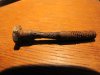
A sacrificial zinc would have protected this bolt for a while. Sacrificial zincs work by corroding first. Steel boats in salt water use sacrificial zincs, and the owners have to replace them regularly. Once the zinc is gone, the corrosion starts working on the steel.
The zinc on a zinc-plated steel washer would not last long in this situation. A pure zinc washer would last longer, but in sacrificing itself it would corrode away, leaving a washer-sized gap in your structure.
Remember we have 2 kinds of corrosion to worry about, oxidation and galvanic. Stainless metals guard well against oxidation (rust). Galvanic corrosion happens between dissimilar metals in an electrolyte (like salt water). I suspect the thin part of this bolt happened when salt water worked its way into the bolt-hole in the fiberglass, and then sat there. Then the iron in the bolt sacrificed itself to protect the more noble metals (chromium and nickel).
This bolt served for 10-12 years, with annual 3-month salt baths on the PA turnpike. I replaced all these bolts with high-tensile-strength stainless steel bolts, which I expect will have a similar life-span. I plan to remove and replace these bolts again when I take the bed off for frame rust treatment. Once I believe I'm finished removing the bed, I'll spray the under-body bolts with Rustoleum's zinc paint. That will give them both mechanical and galvanic protection from salt. I also won't expect them to last forever.
While we can do things to protect against corrosion, those of us who drive on salty winter roads will always have corrosion problems. I saved this bolt as a reminder to myself of what invisible corrosion can do. It makes me think about what other hidden corrosion problems I might have, and what I can do to find and correct them.